
CONTENTS
- Introduction to Estuary kayaking
- Launch and landing locations
- Plan your route
- Weather
- Tides on estuaries
- Sandbanks
- Estuary mud
- Summary
1. INTRODUCTION TO ESTUARY KAYAKING
Having kayaked a number of estuaries, we thought we’d condense the main tips that we’ve picked up from estuary kayaking.
Estuary kayaking can offer some of the best padding you can enjoy.

They can be daunting at first and involve number of issues which don’t tend to be present with other types of kayaking.
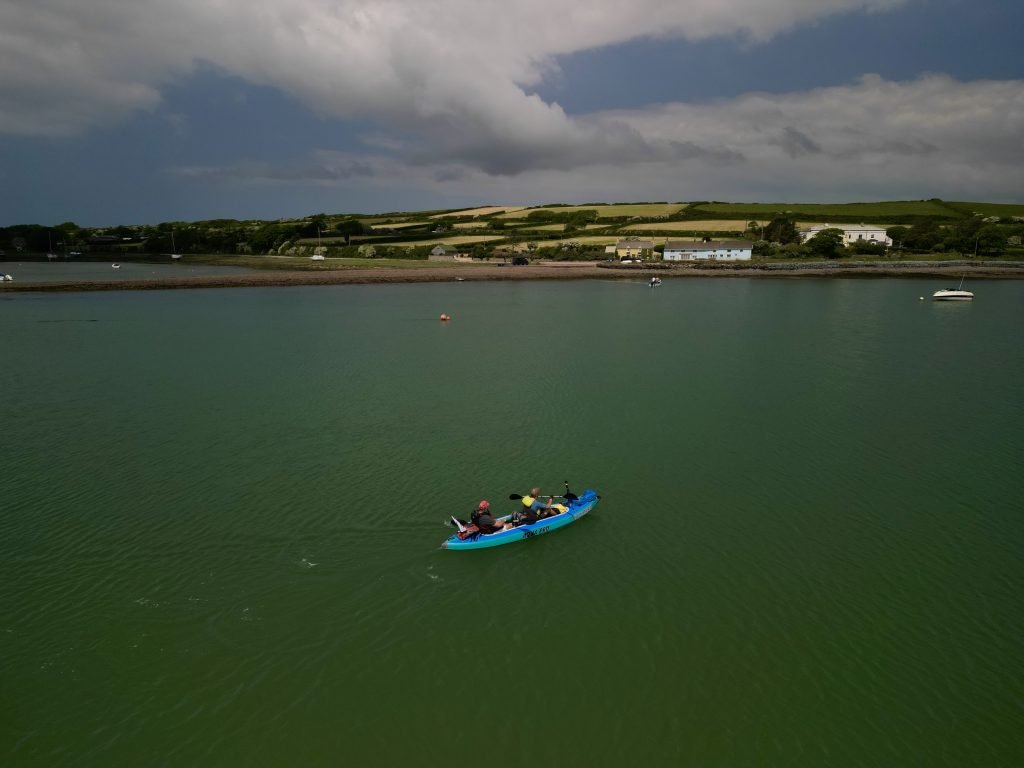
However, as long as you plan your trip well, we can highly recommend kayaking on estuaries and some of our best paddles have been on them.
2. LAUNCH AND LANDING LOCATIONS
You should always plan your Launch and landing locations for your kayaking trips on estuaries.
You are legally entitled to paddle below the ‘tidal limit’ on an estuary or tidal river.
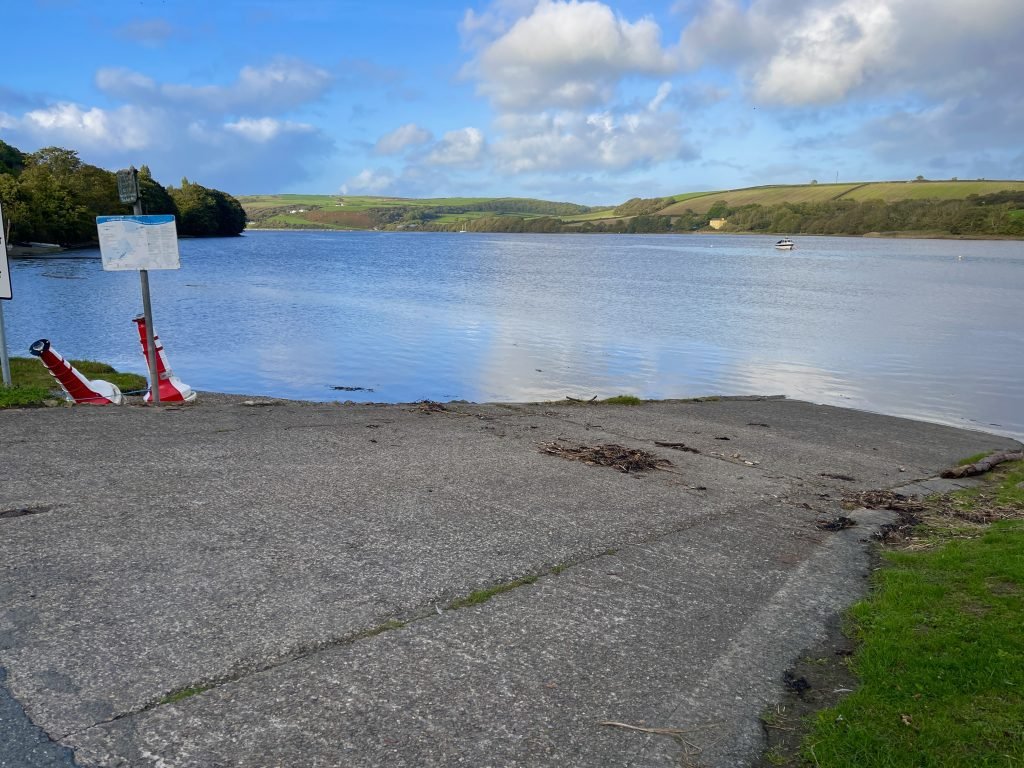
However, you should only launch or land where there is agreed or public access. Some potential access points may be privately owned.
When planning your trip on an estuary, you therefore need to pay a lot of attention to whether you can lawfully access where you are going to launch.
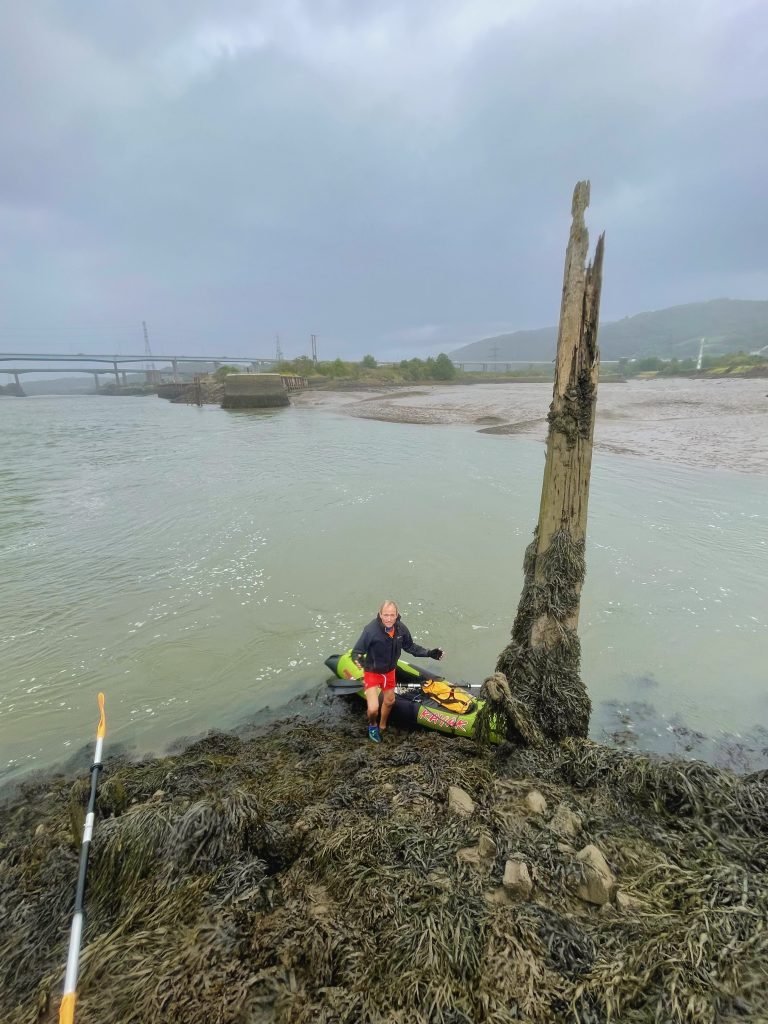
Additionally, you also need to factor in whether those locations will be physically accessible at your planned launch and landing times.
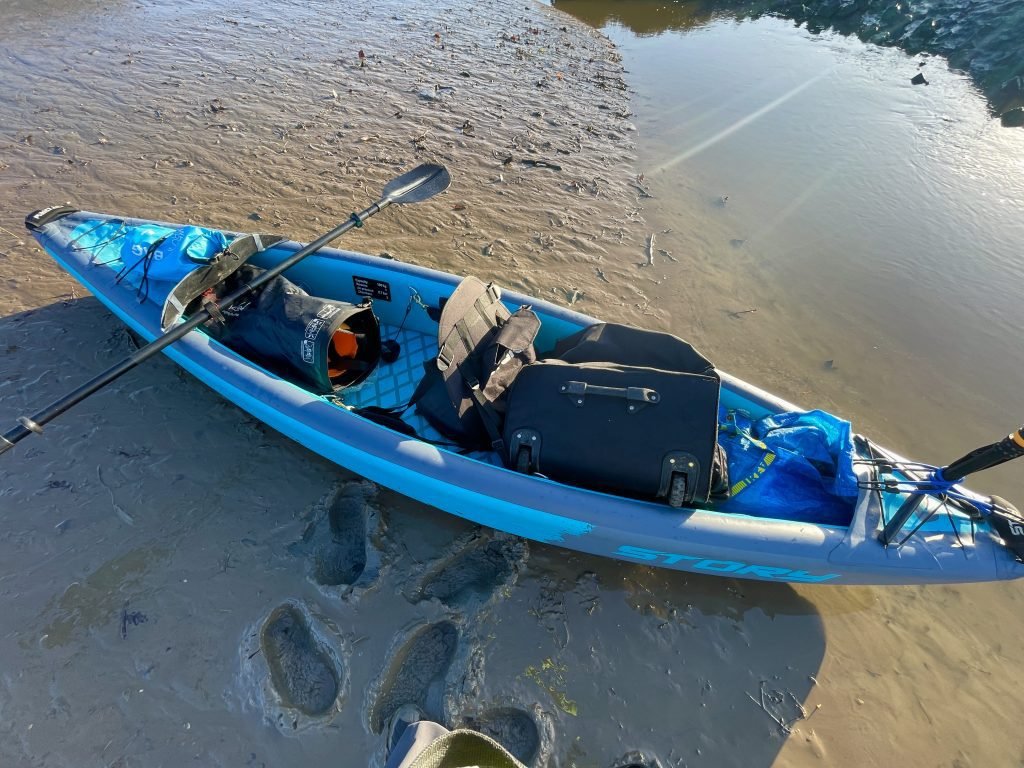
Most estuaries have a big tidal range and it’s often only feasible to launch or land at many locations along estuaries within 3 hours or so of high tide. When the tide drops lower, these launch or landing locations can often become difficult or impossible to access due to them becoming separated from the water’s edge either by large tracts of sand, or by swathes of estuarine mud, or sometimes even both!
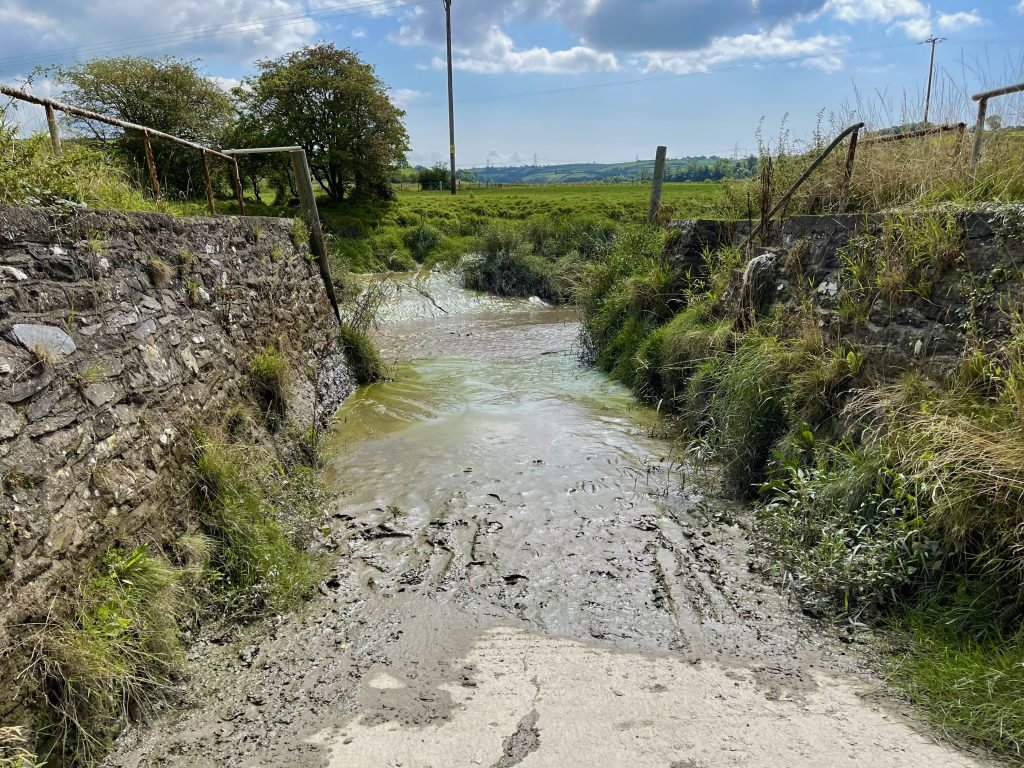
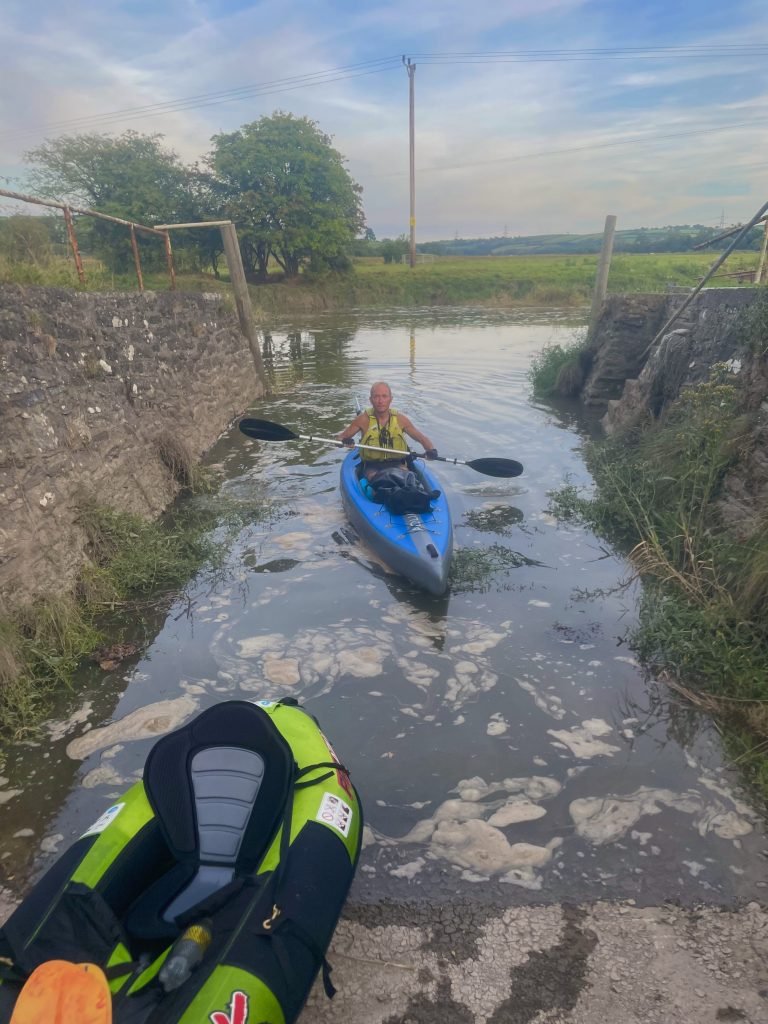
If you need to take a break along the route, you can get out below the high tide mark on the banks of the estuary but sometimes the estuary banks can be very muddy and soft.
3. PLAN YOUR ROUTE
It is obviously important to plan your route along the estuary with a view to knowing where you were launching and landing and how long the route is going to be.
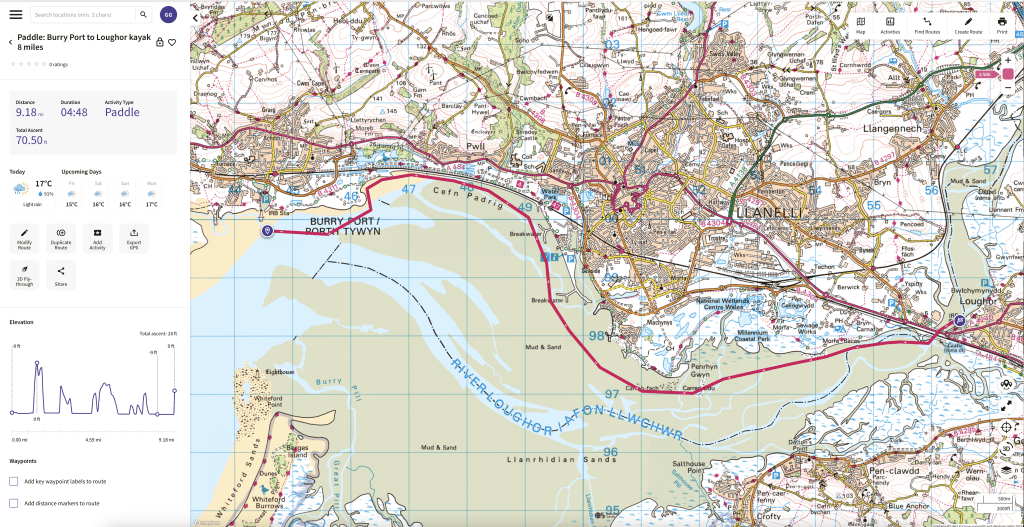
We use a UK service called OS Maps to plot all of our routes before we go estuary kayaking.
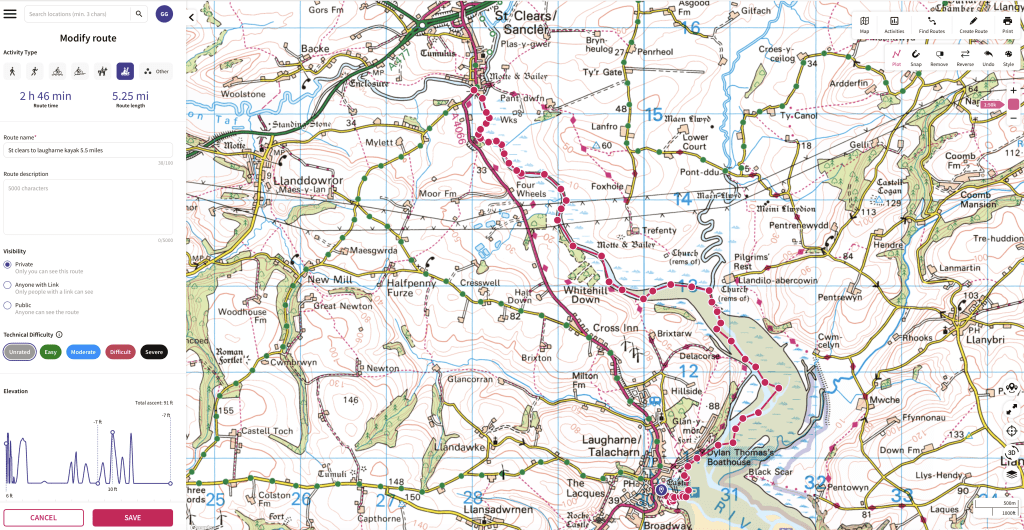
With OS maps, you plot the route using a series of waypoints and the distance of the route then incrementally increases as you add each waypoint. On estuaries, we find that alternating between satellite and map overlays helps to ensure that your route is along the main channel of the estuary so that you avoid straying off onto sandbanks.
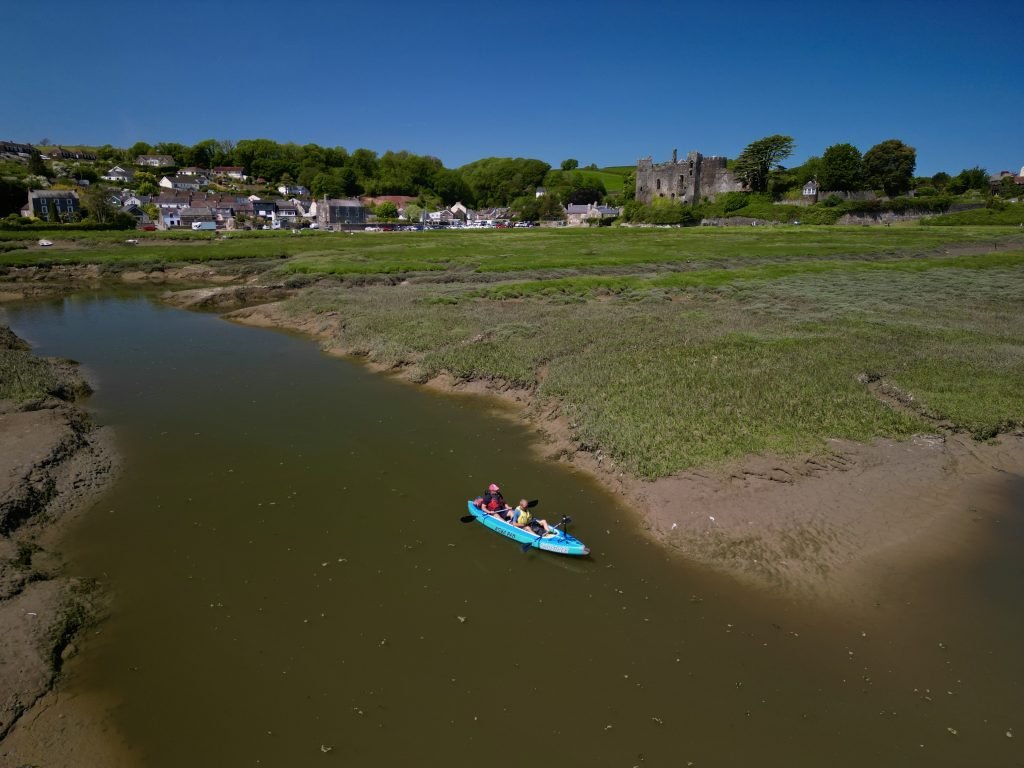
We generally do one way linear routes when paddling estuaries, either upstream with the incoming tide or downstream with the outgoing tide.
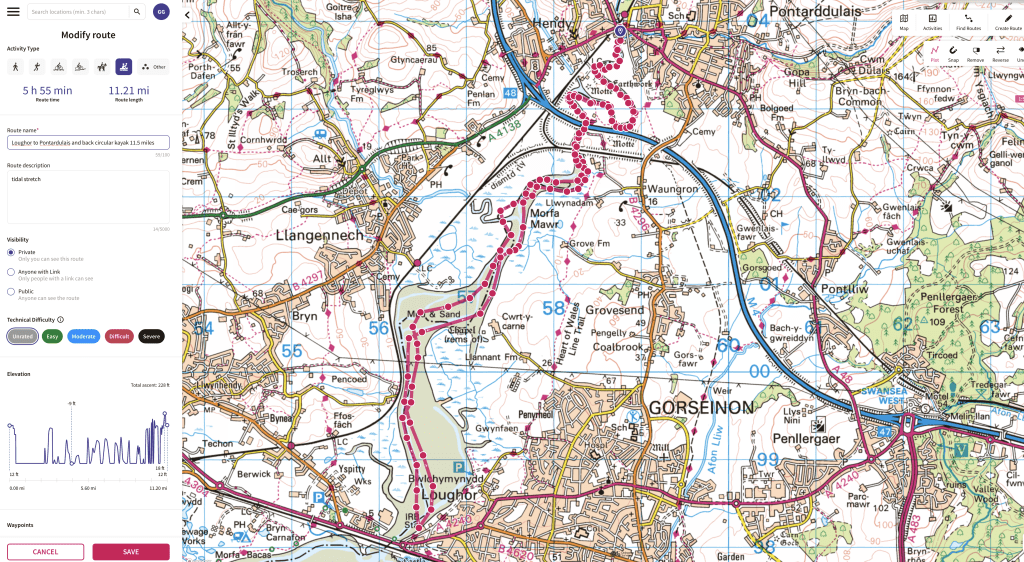
However, we have also done some circular routes on estuaries where we have gone upstream with the incoming tide and then paddle back down to the start with the outgoing tide.
4. WEATHER
While estuaries are generally more sheltered compared to paddling on the open sea, if you are on a large, wide estuary then strong winds can be quite an issue.
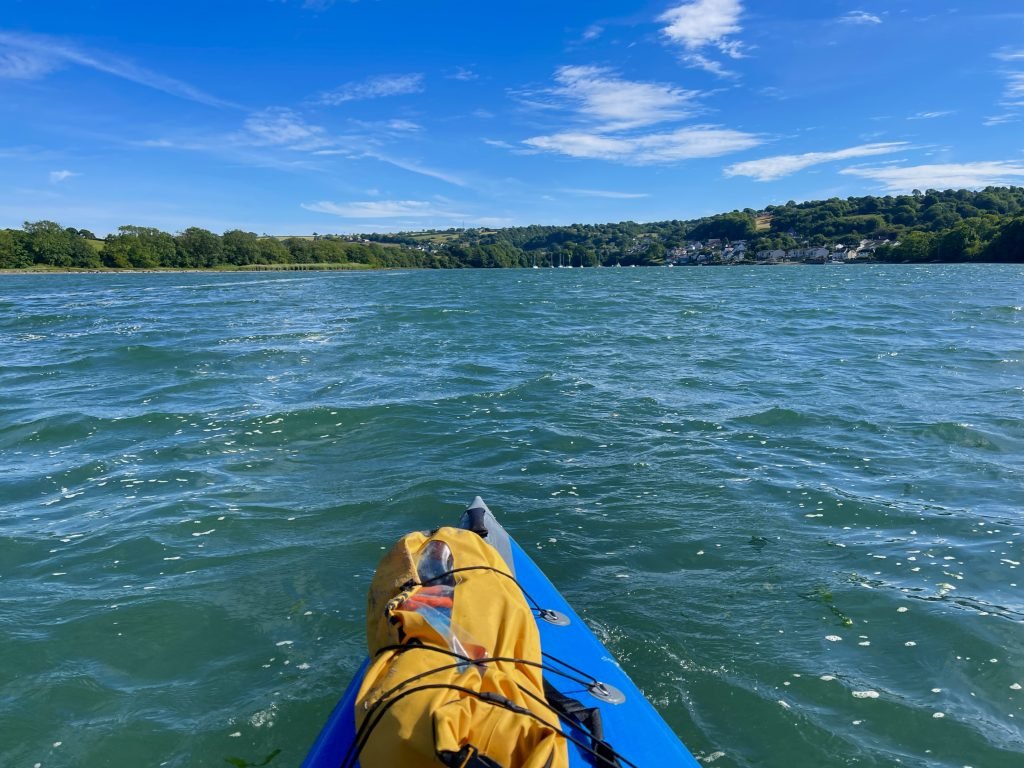
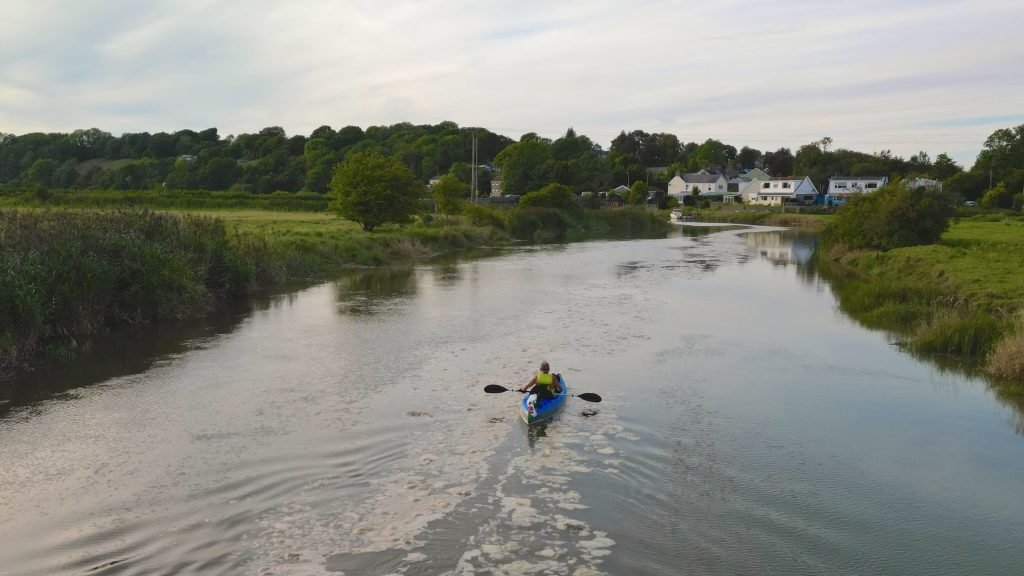
What we find is the further you go upstream an estuary, the narrower and more sheltered the terrain gradually becomes.
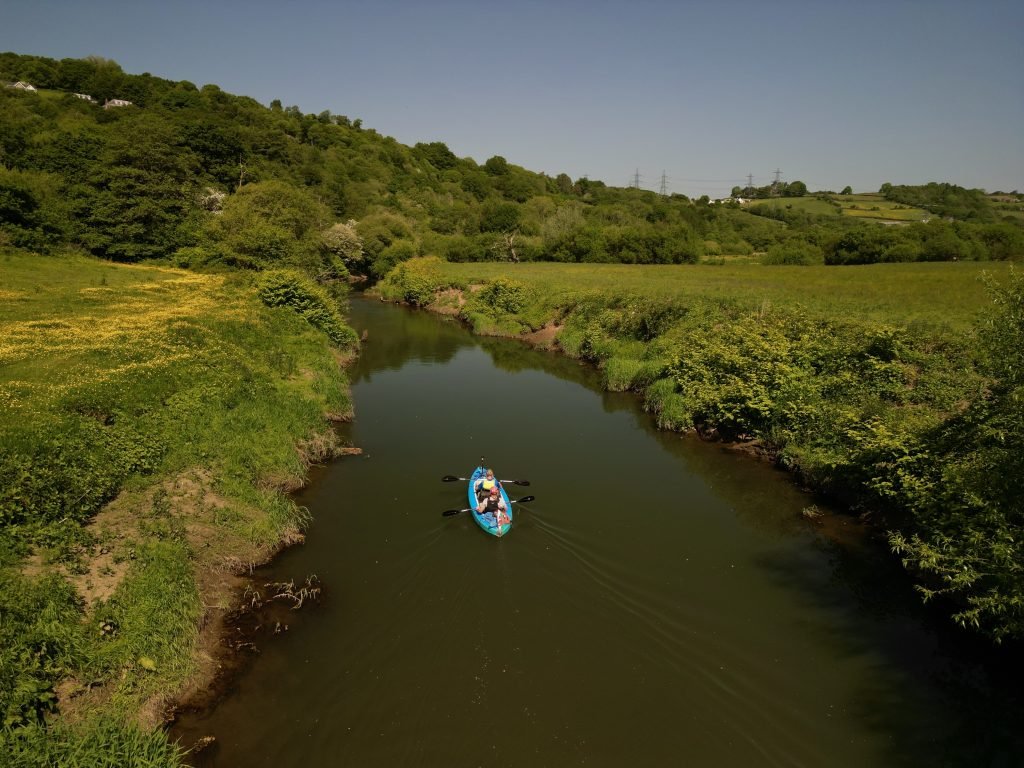
When estuary kayaking, you generally want to be paddling with the wind behind you since paddling against a strong headwind can be a case of 2 steps forward, one step back.
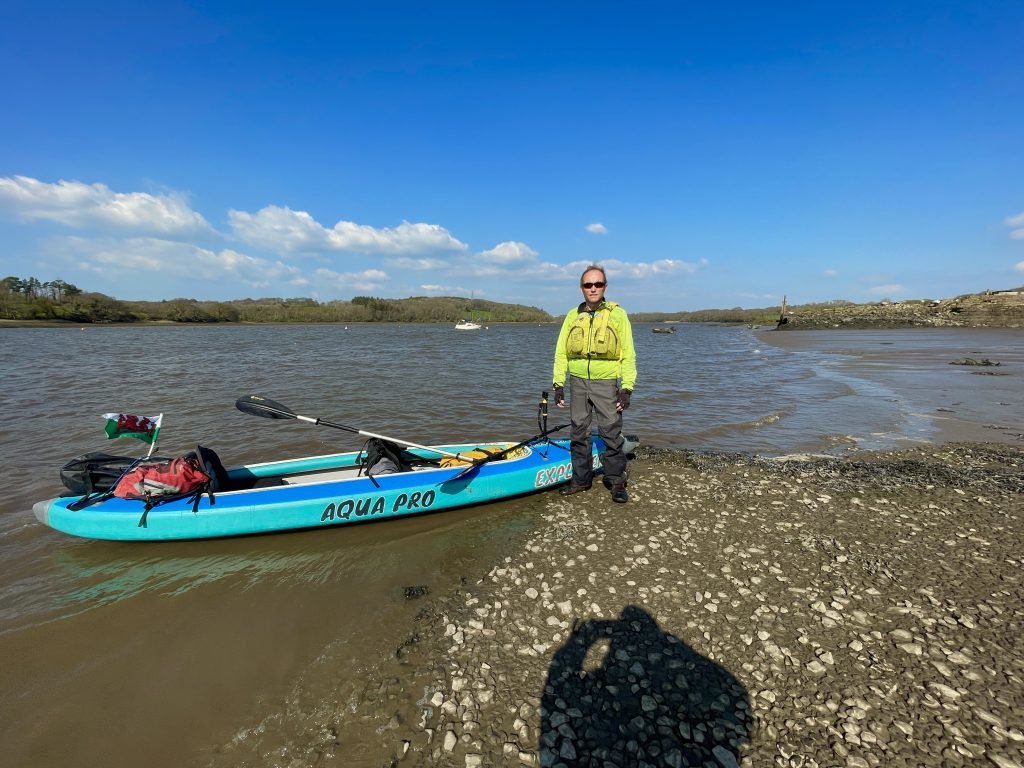
Inflatable kayaks are more susceptible to wind than hard shell kayaks in this regard, because they sit on the water rather in it.
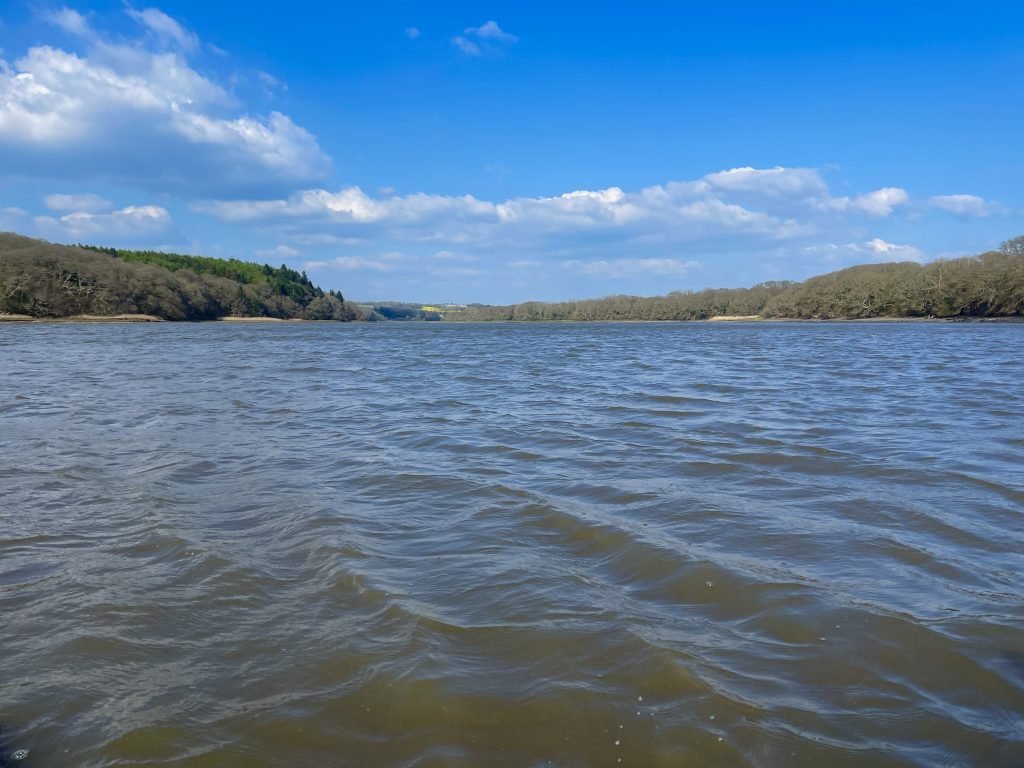
We have got caught out paddling on estuaries once or twice where the wind has been stronger than we thought and has turned against us, leading to some quite challenging paddling against strong winds.
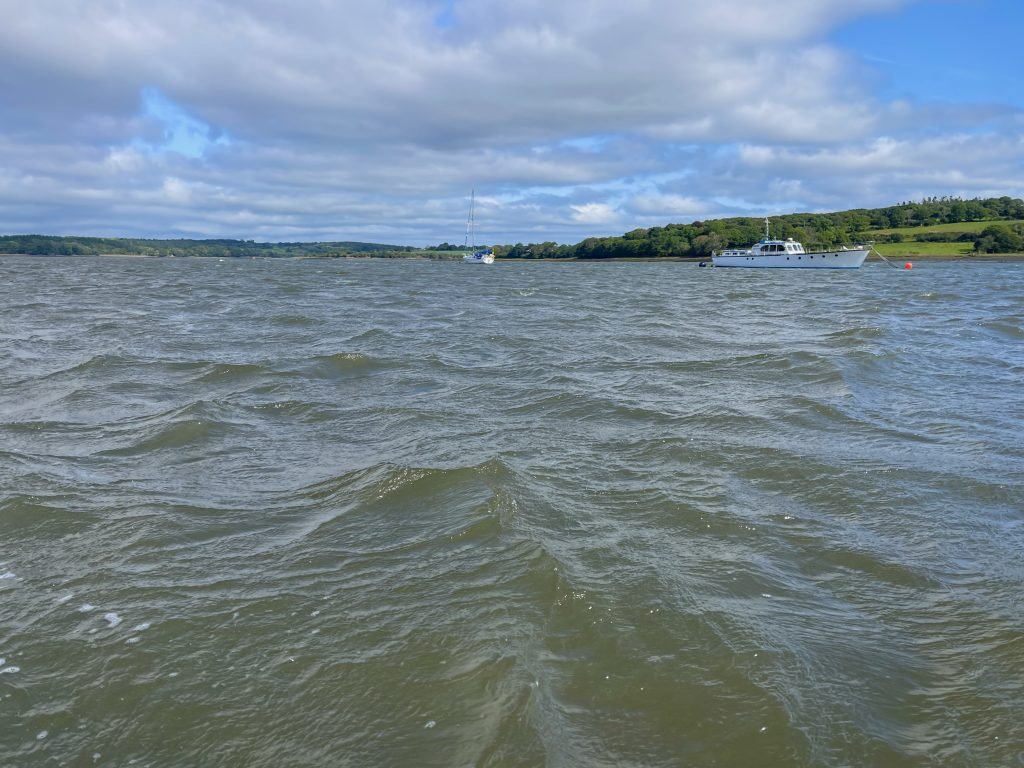
Strong winds are the nemesis of kayakers and we do not generally go out if the forecast is that the wind is going to be in excess of 20mph at most.
5. TIDES ON ESTUARIES
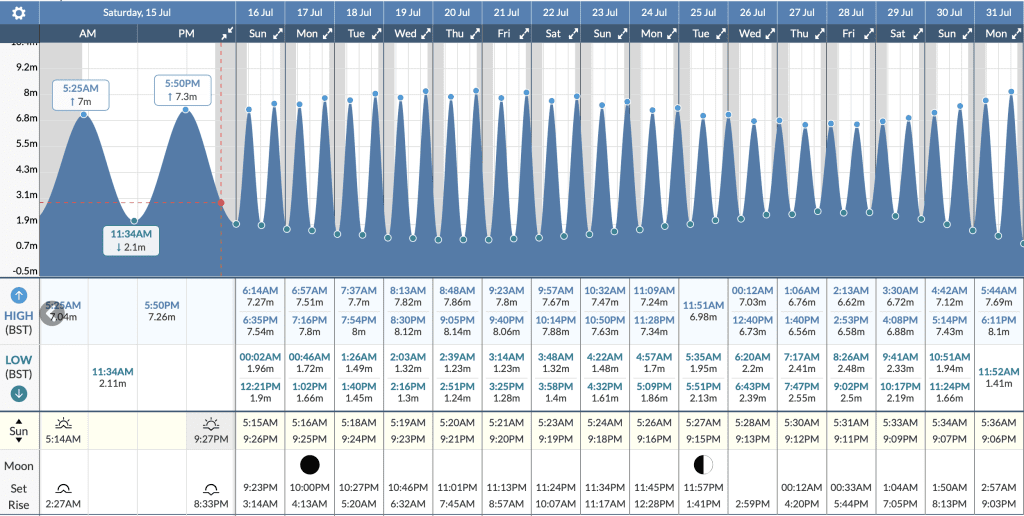
Tides are a particularly important factor when estuary kayaking.
By their nature, estuaries almost invariably have strong tidal currents so you therefore always should check the tide times before undertaking any estuary kayaking.
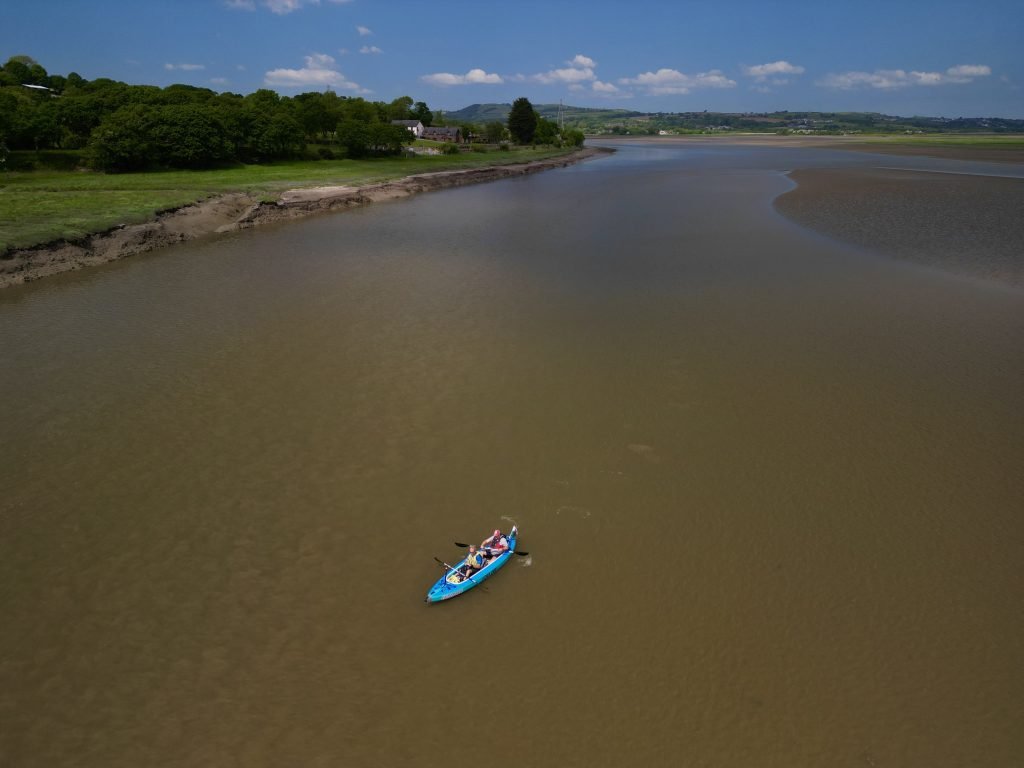
We find that the most reliable website for checking the tide times is tidetimes.org.uk.
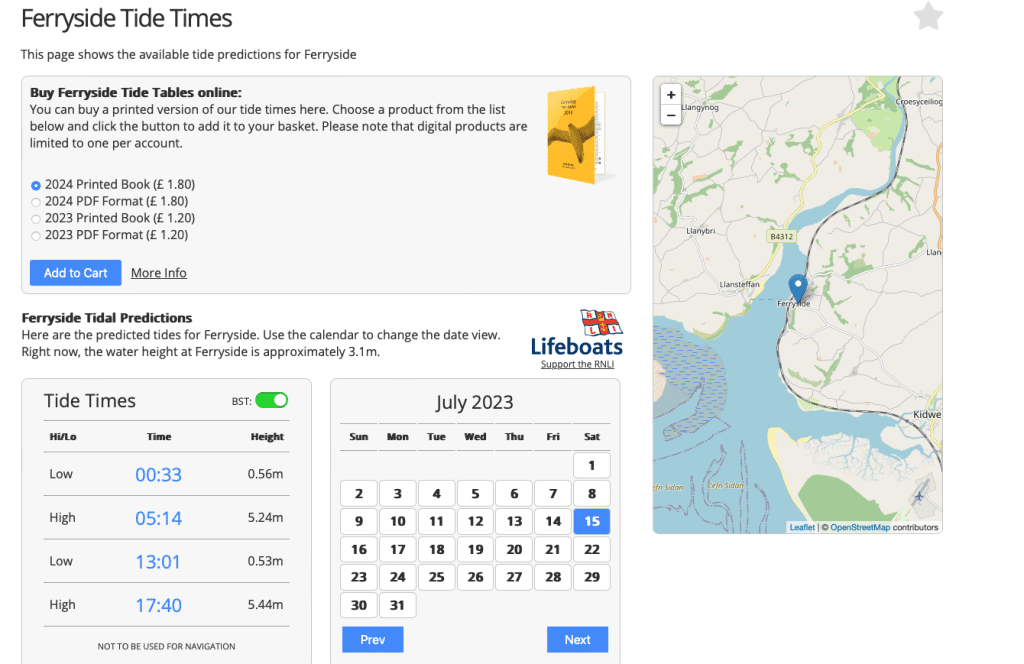
Due to the strength of the tidal currents on estuaries, you generally have to go with the tide and often times the tide will be too strong to actually paddle against.
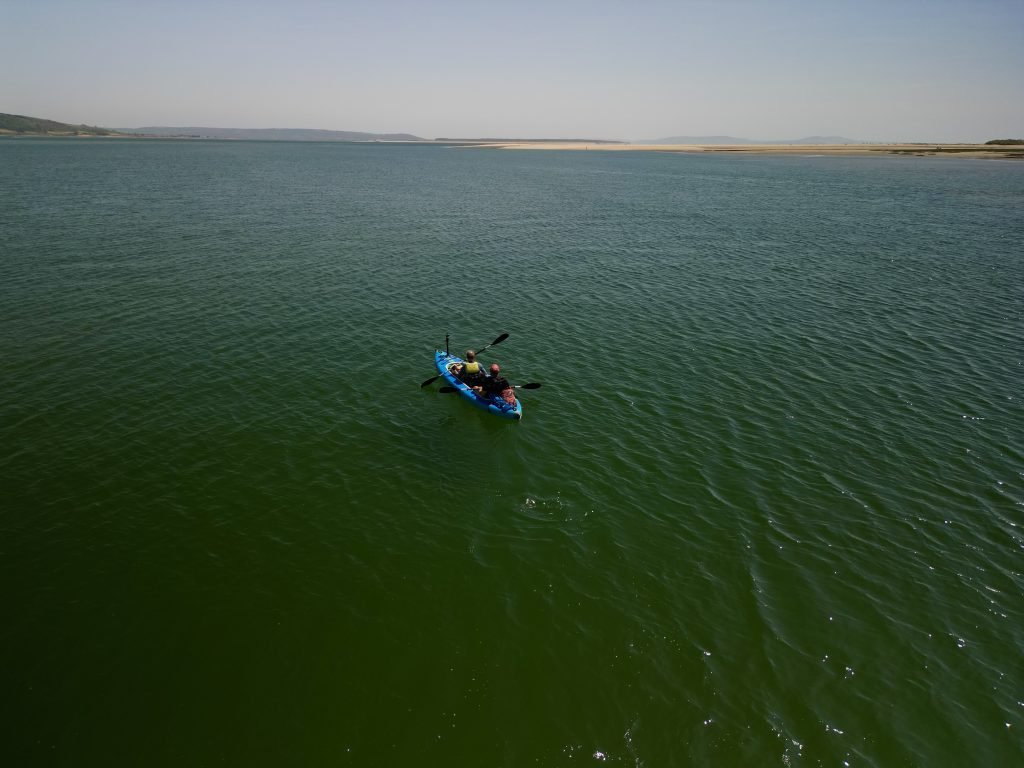
When we go estuary kayaking, we are always surprised how much the tide assists you along when you are paddling with it.
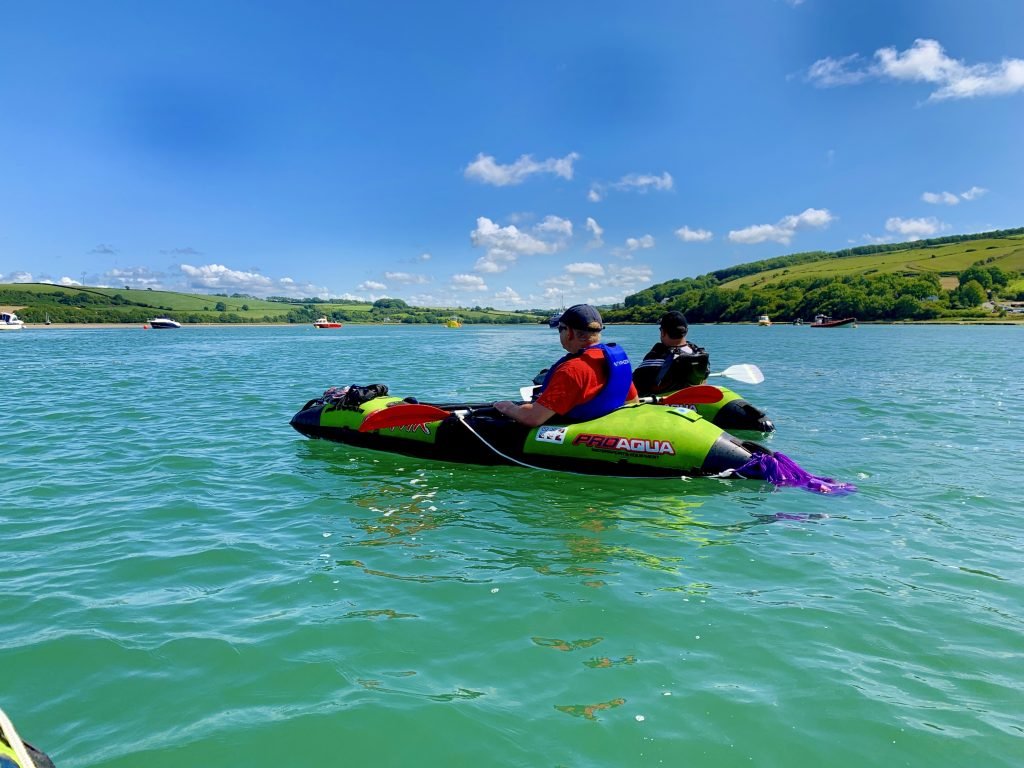
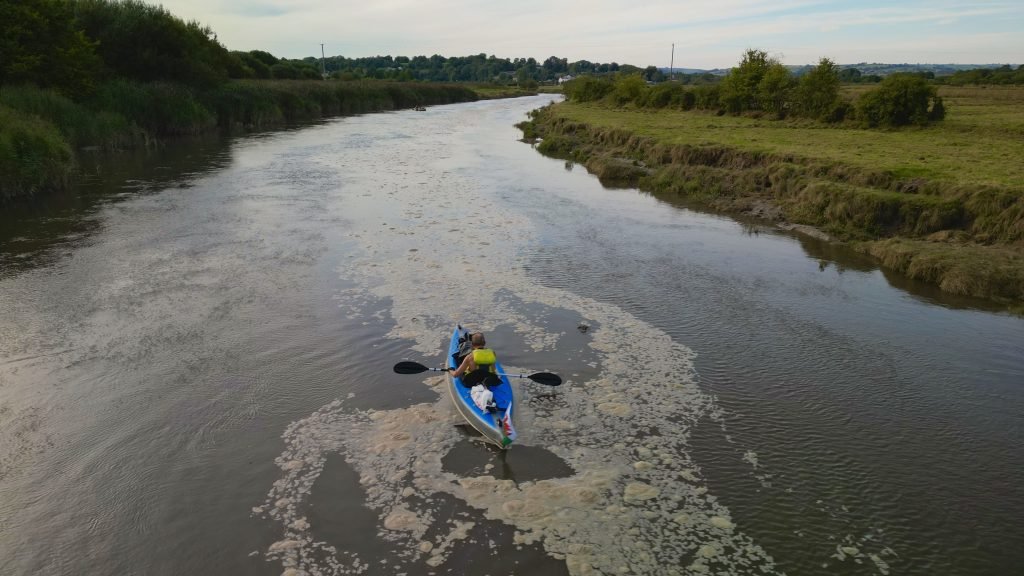
It does feel slightly surreal when you’re gliding about 3-4 mph upstream on and estuary with the incoming tide without even paddling.
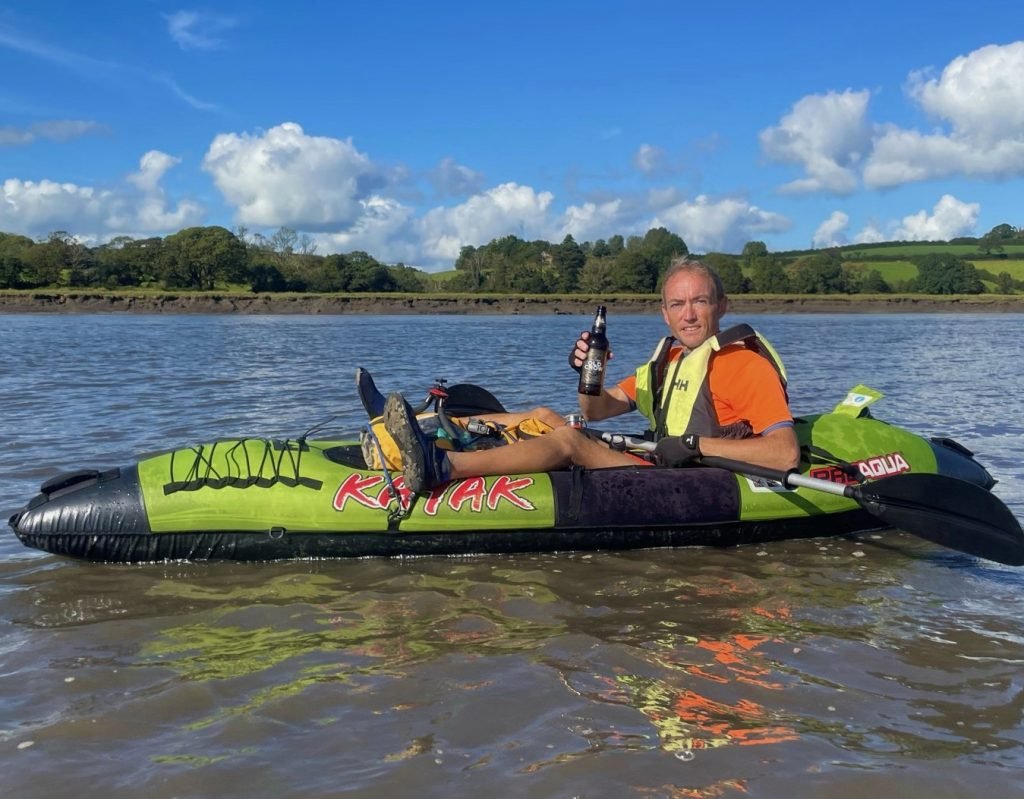
Remember, the tides generally run in cycles of about 6 hours, so they’re 2 high tides and 2 low tides every 24 hours or so. There are usually about 6 hours between each high tide and each low tide but it can vary.
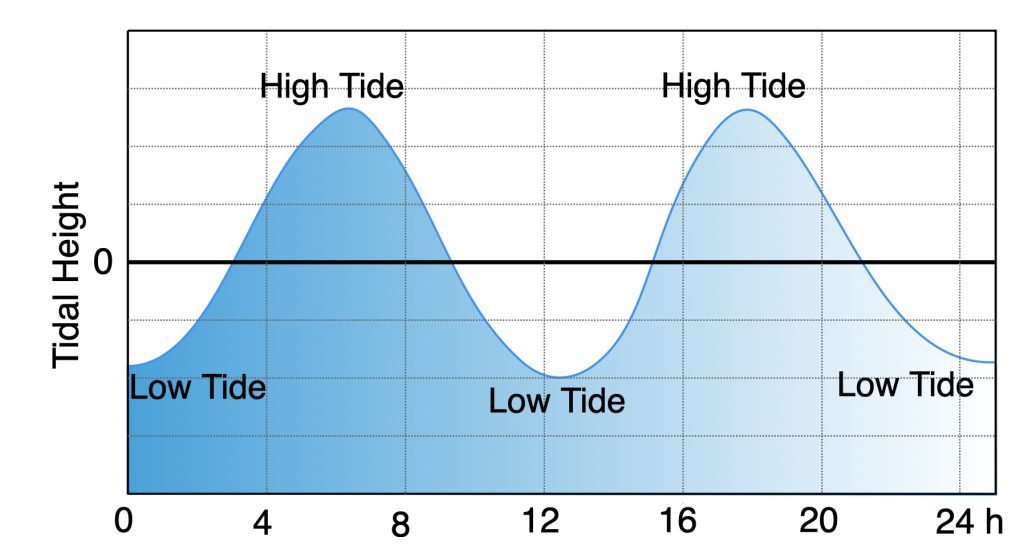
The tides will run the fastest roughly halfway between high tide and the next low tide.
Conversely, you tend to get a period of between 30 to 60 minutes either side of high tide and low tide known as slack water or flat water where the current is flowing the slowest.
Another important issue to bear in mind is that not all high tides are equal.
Tides are cyclic according to the phases of the moon and if you look at tide charts you will soon realise that the height of the high tide and low tide is constantly varying day by day.
The variance in the different heights of high tides affects the strength of the tidal current but also dictates the height of the high water mark which in turn may cause you issues regarding your planned landing or launch spots.
6. SANDBANKS
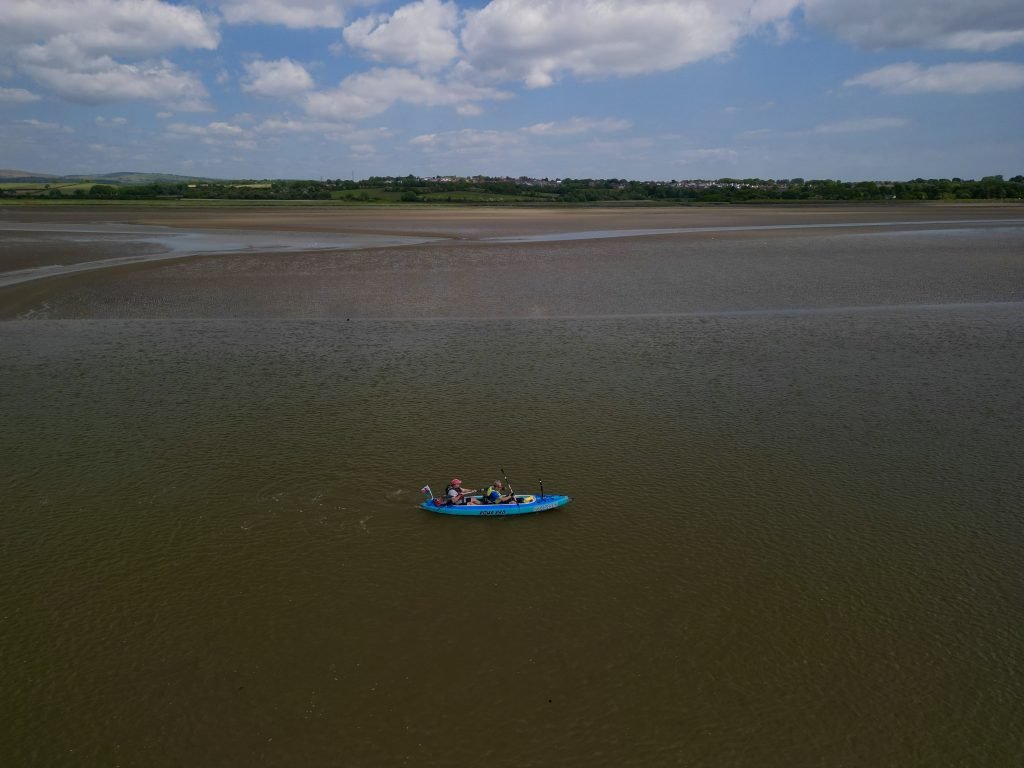
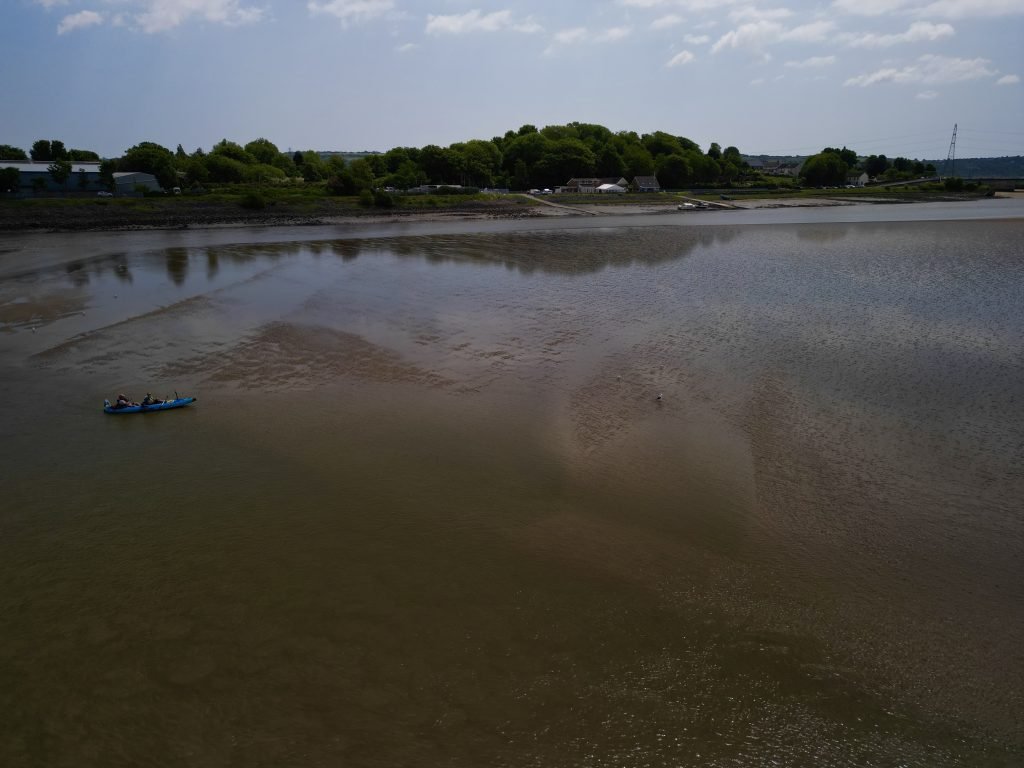
One peculiarity of estuaries is that when the tide starts to drop on them, you often get large sandbanks becoming exposed which can create a number of issues for kayakers.
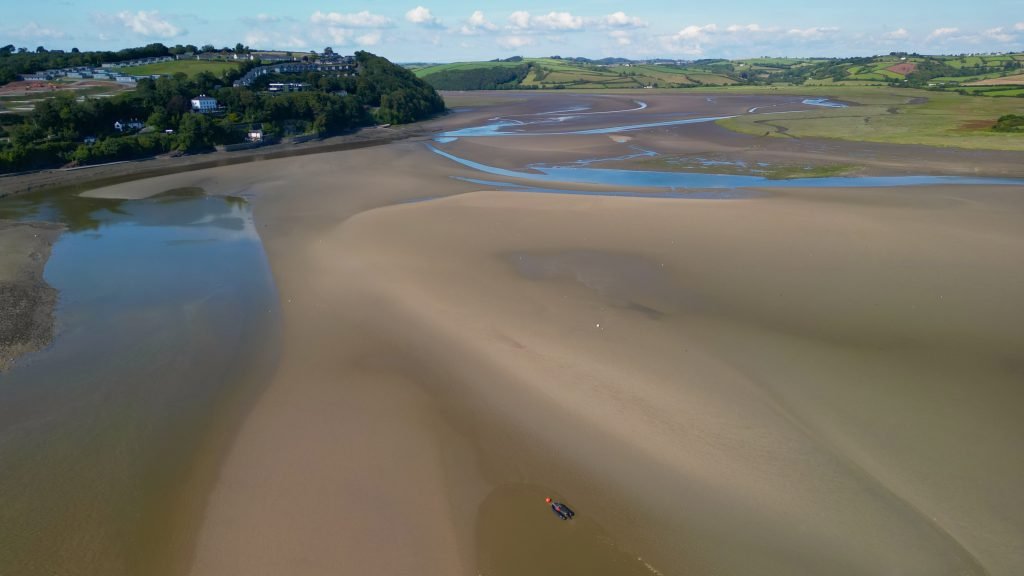
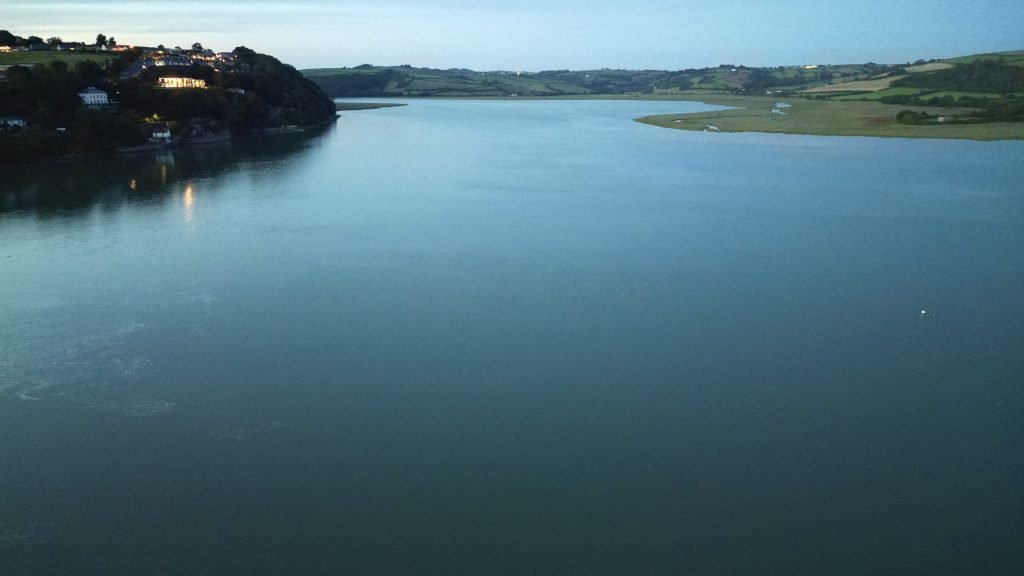
Each estuary is of course different and will have its own pattern of channels and sandbanks.
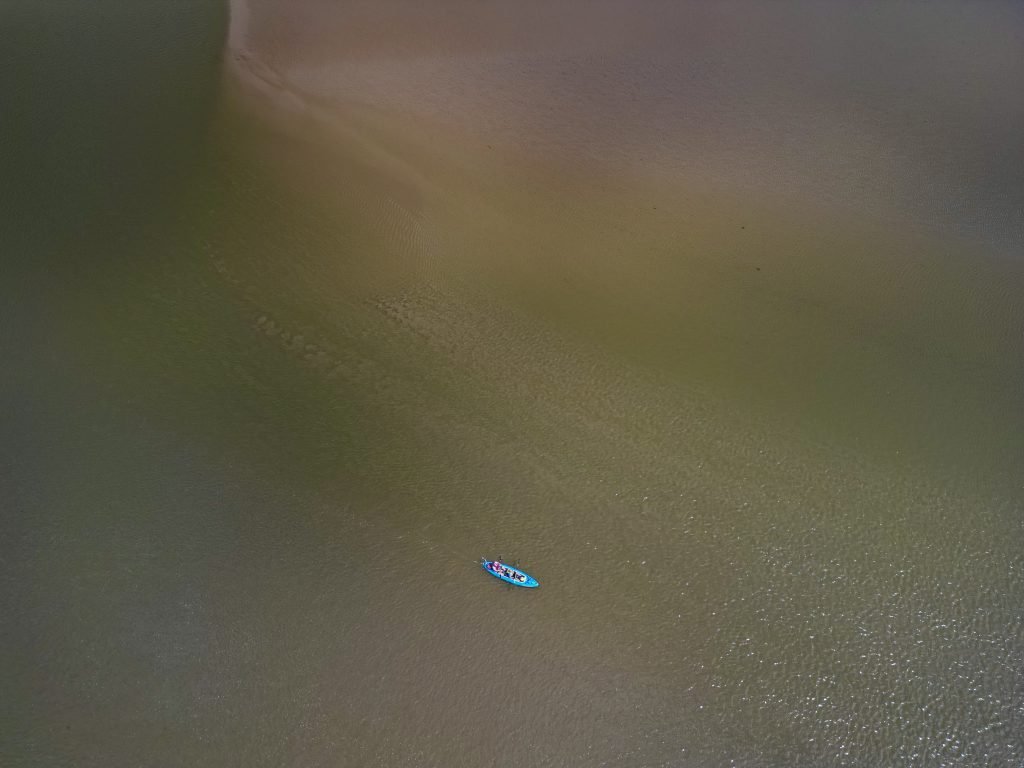
We usually use mapping program or app with satellite view such as Google maps useful to see where the main channel of the estuary runs and where the sandbanks are.
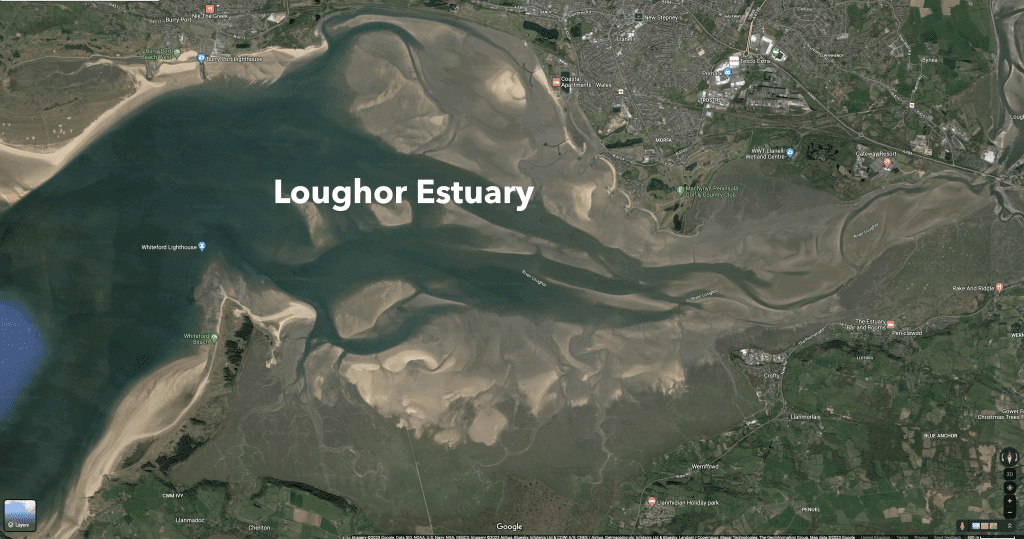
Generally, you want to try to stay in the main channel of the estuary since if you stray from this then you can find yourself becoming grounded on sandbanks when the tide starts to drop.
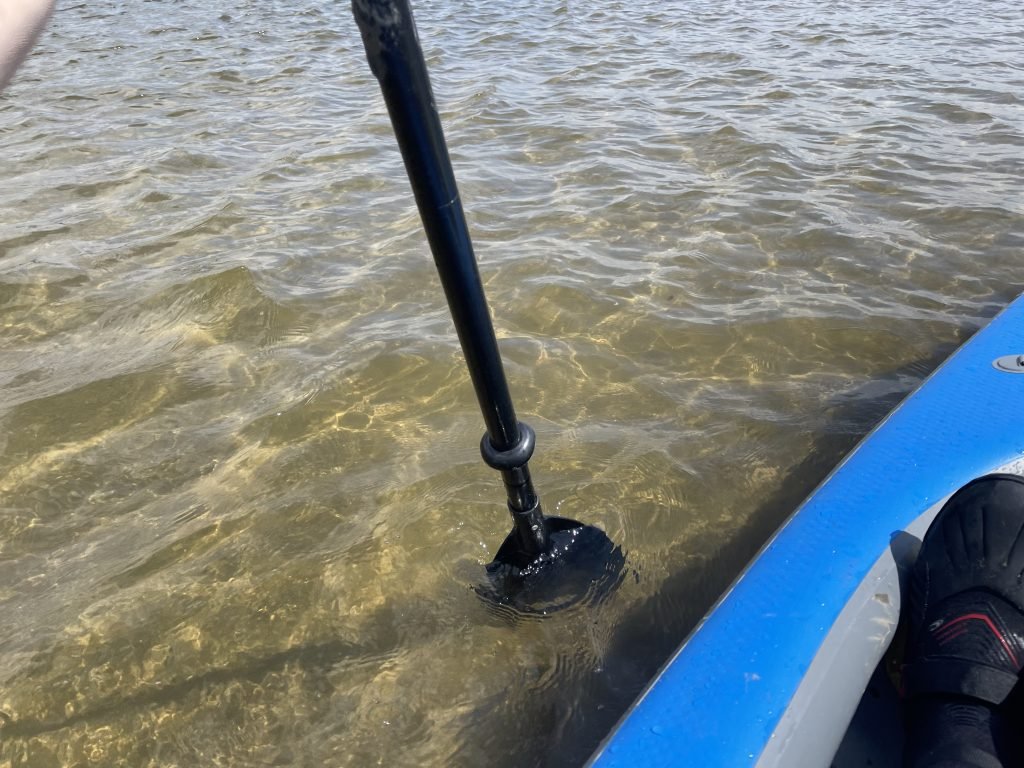
Oftentimes, grounding on the sandbanks is not problematic since you can simply get back into the main channel.
However, you can stray off the main channel into a side channel which literally takes you up a dead end.
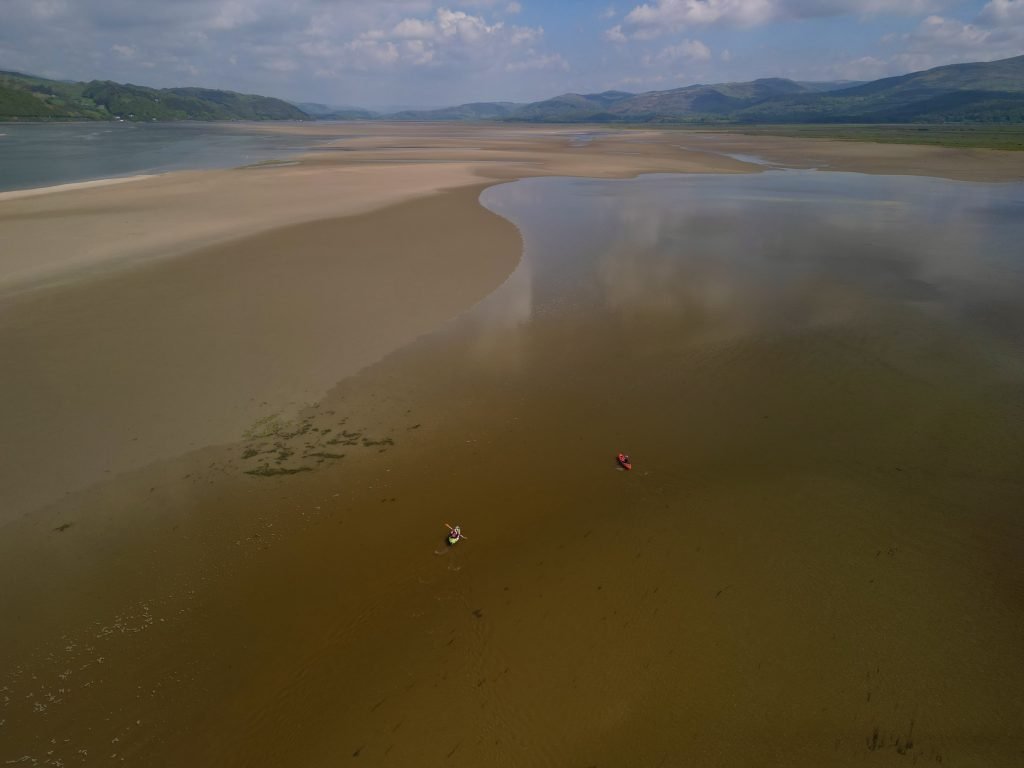
We find that the sand on the sandbanks is generally firm enough to drag or carry your kayak across them if needs be.
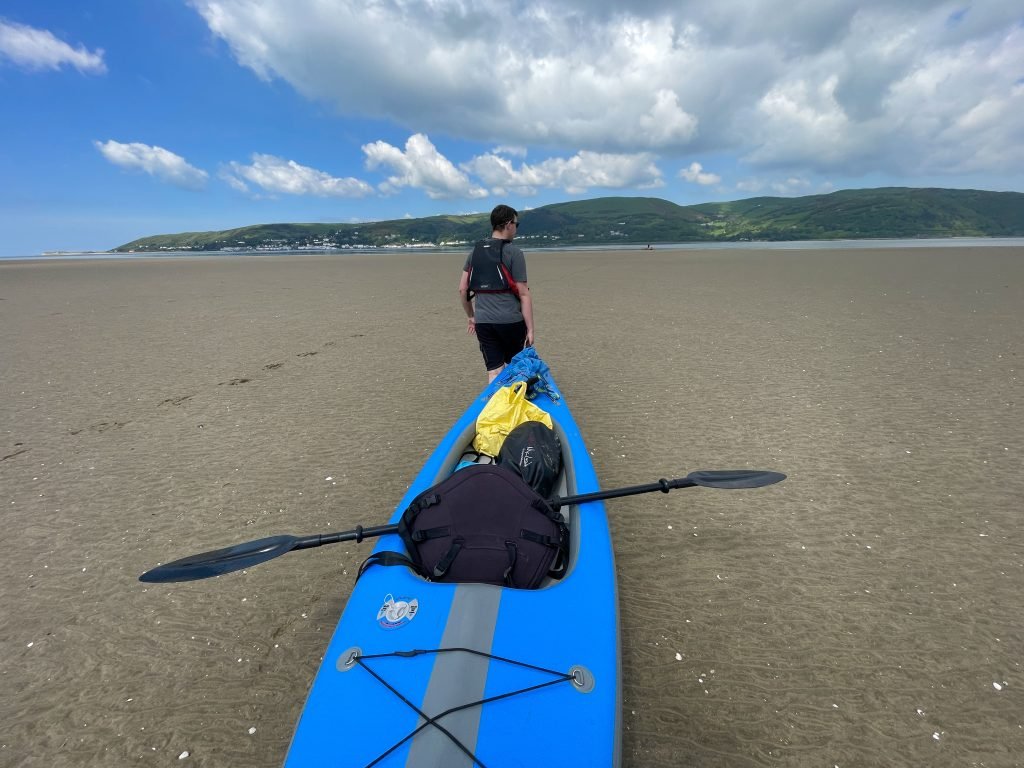
However, you cannot assume that the sandbanks will not turn into soft estuary mud.
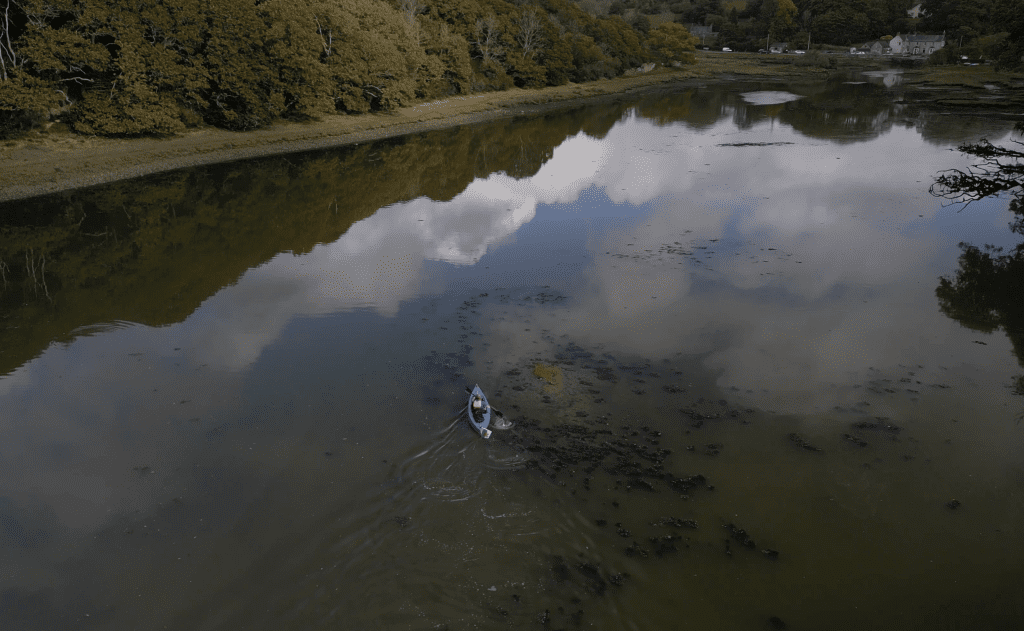
In summary, research the layout of the estuary you are going to paddle before you set off so you are clear where you need to paddle to stay in the main channel and avoid sandbanks and other smaller channels which may lead you astray.
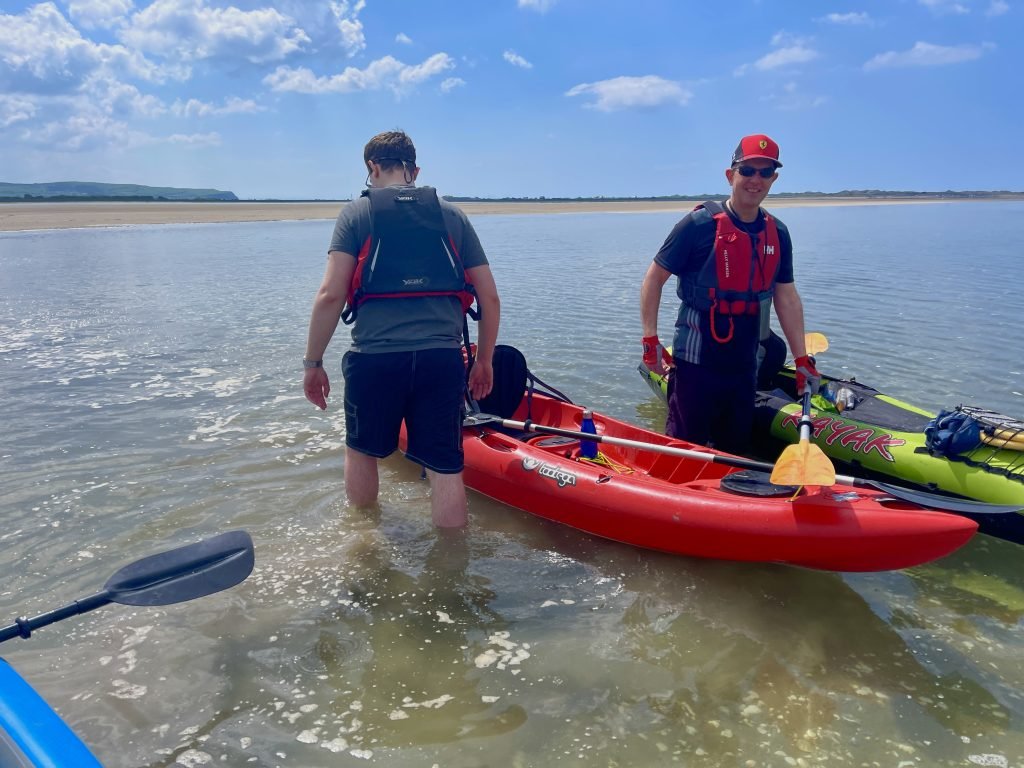
We generally only paddle on estuaries up to 3 hours either side of high tide since once you get within 2-3 hours of low tide there can be lots of sandbanks due to the water levels being low.
7. ESTUARY MUD
Another peculiarity of estuary kayaking is estuary mud.
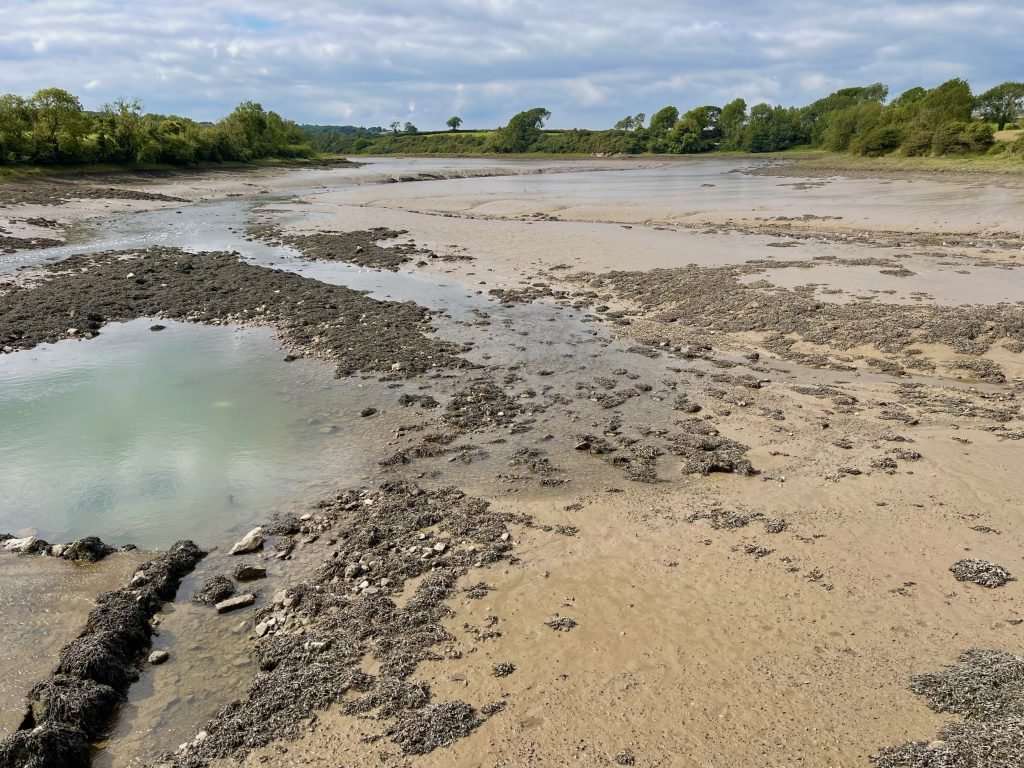
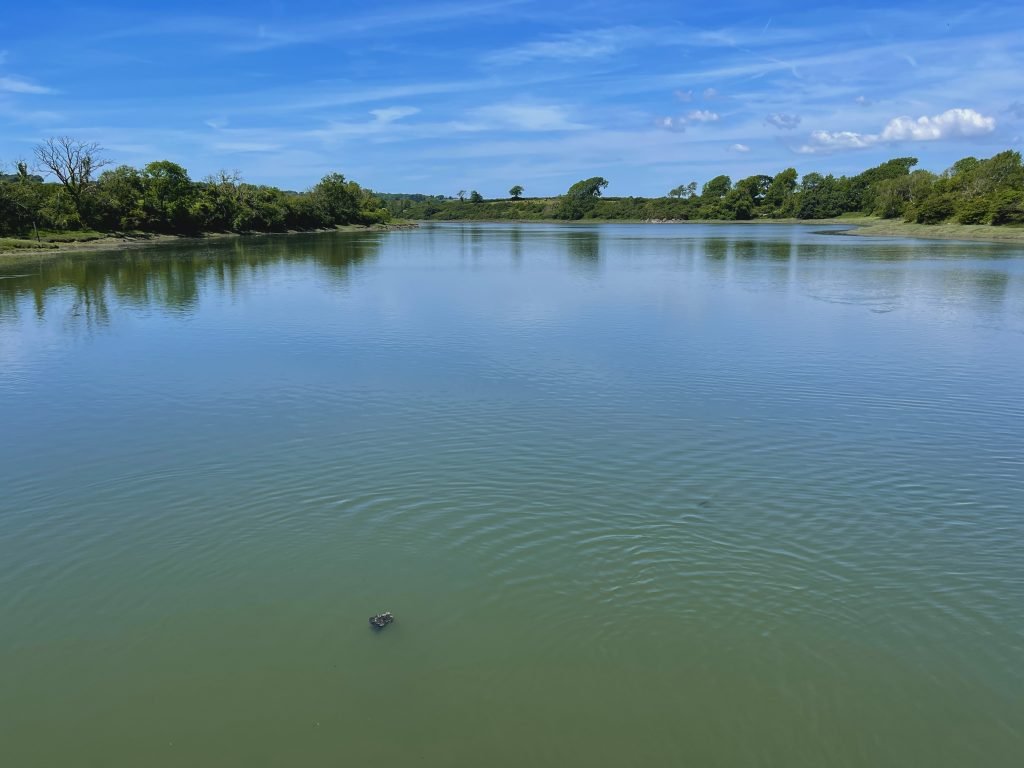
This tends to be an issue around the fringes of the estuary for anything up to 200 meters or so below the below the high water mark.
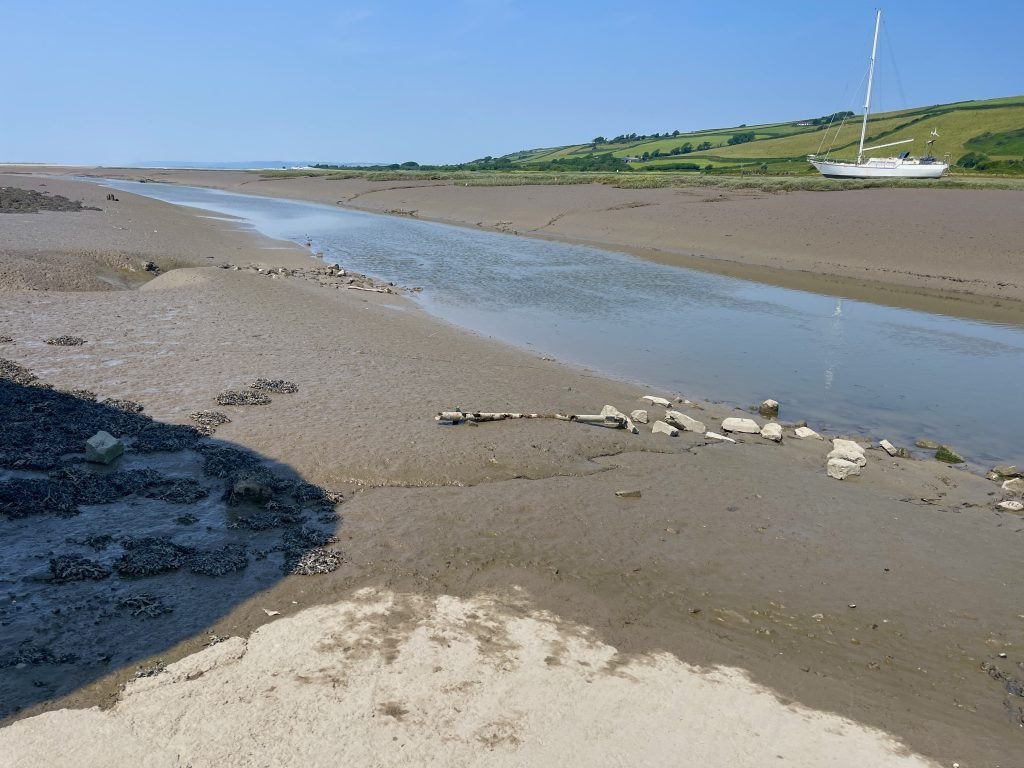
The extent to which estuarine mud is an issue varies between different estuaries.
Every estuary we have paddled has, to a degree, had areas where very muddy sections are exposed when the tide starts falling.
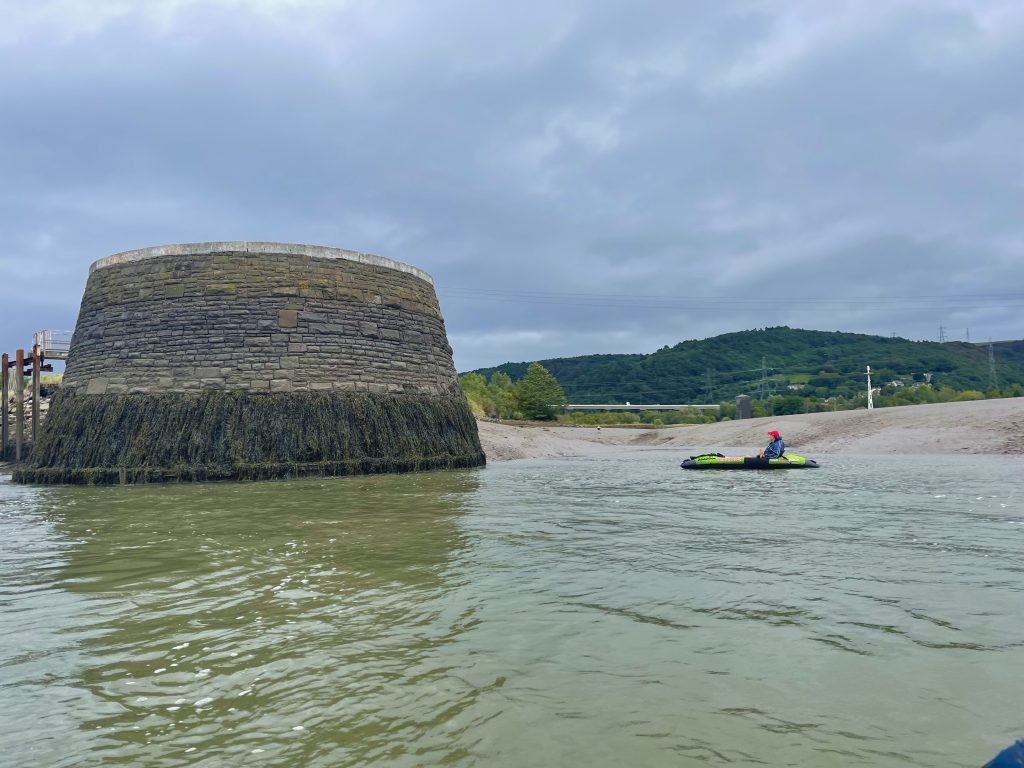
The main issue with estuarine mud is where it forms between the waters edge and your proposed launch or landing spots.
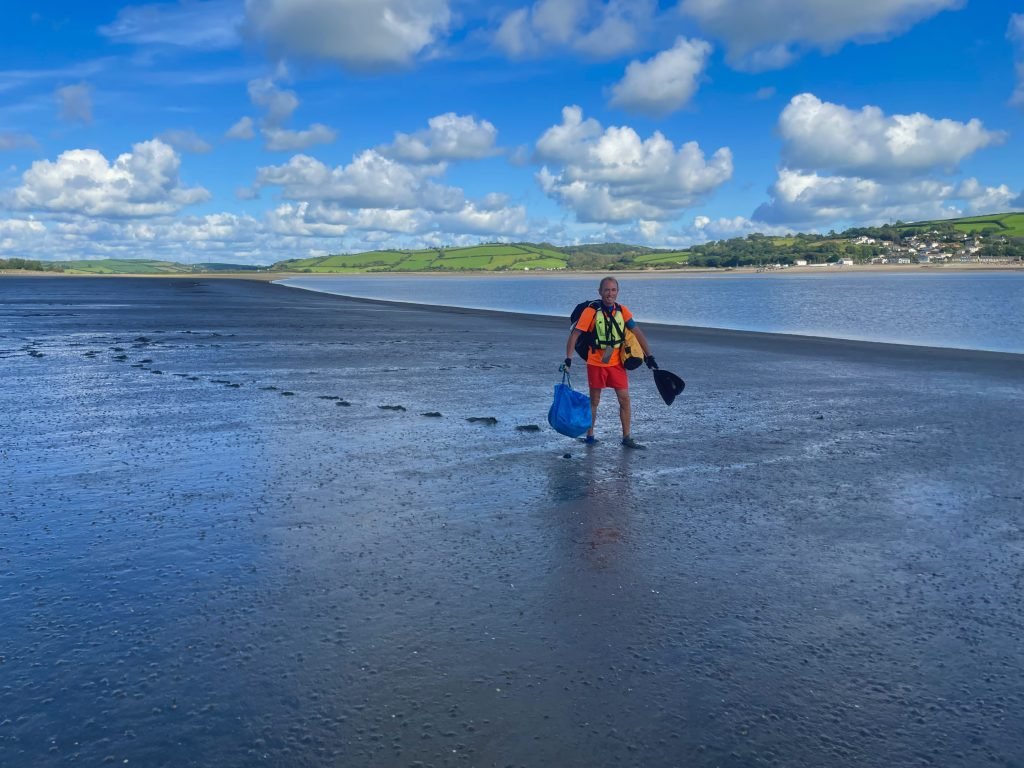
You often simply cannot drag or carry your kayak across such muddy sections without ending up to your knees in mud.
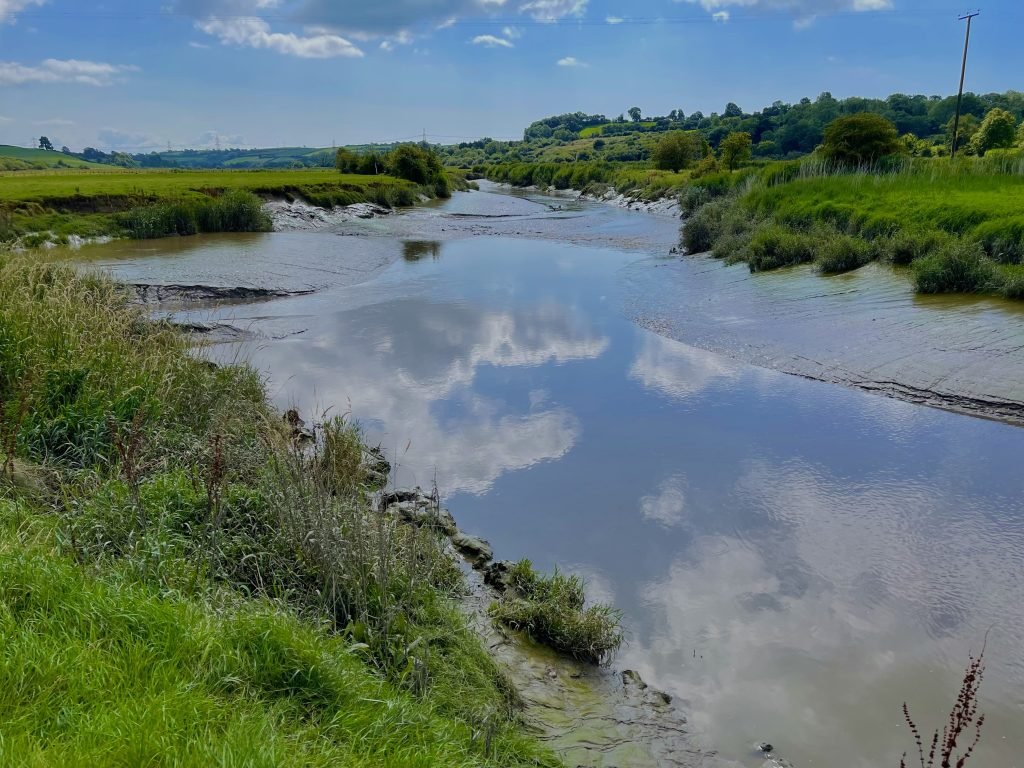
Such mud can form a barrier to landing or launching your kayak so you need to familiarise yourself with the terrain of the estuary that you were planning to paddle to make sure that this mud will not be an issue for you.
8. SUMMARY
In summary, estuaries can afford some of the finest paddling that you can experience.
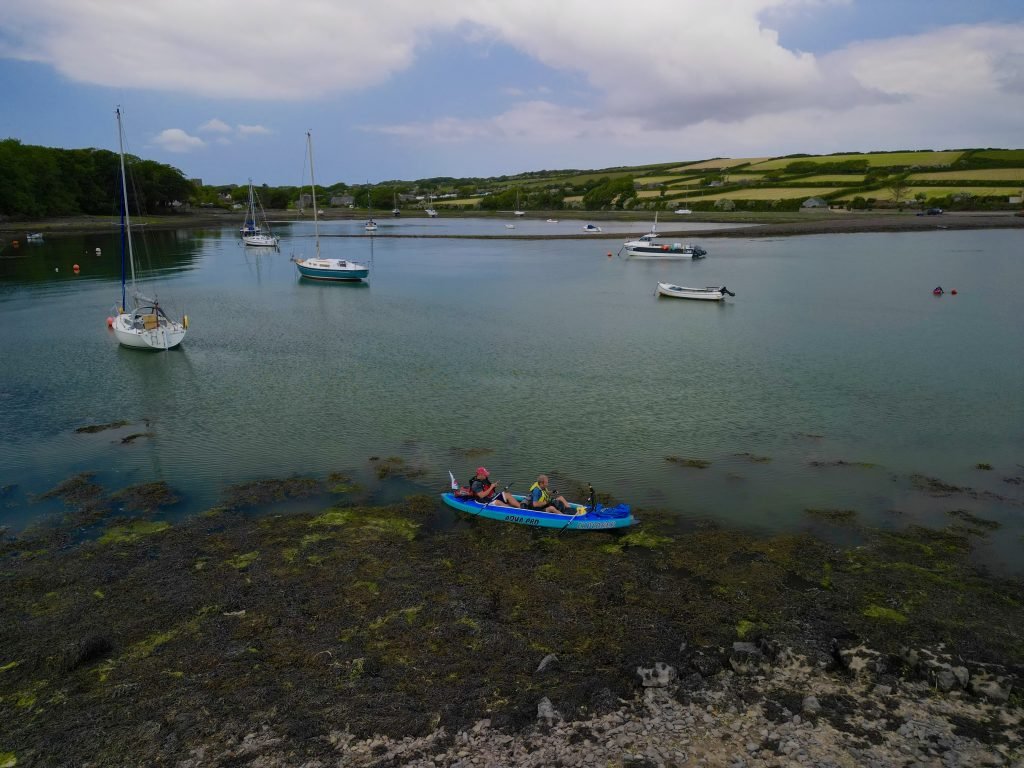
We have greatly enjoyed the estuaries that we have paddled and because we have planned them well, we have not really had any major mishaps.
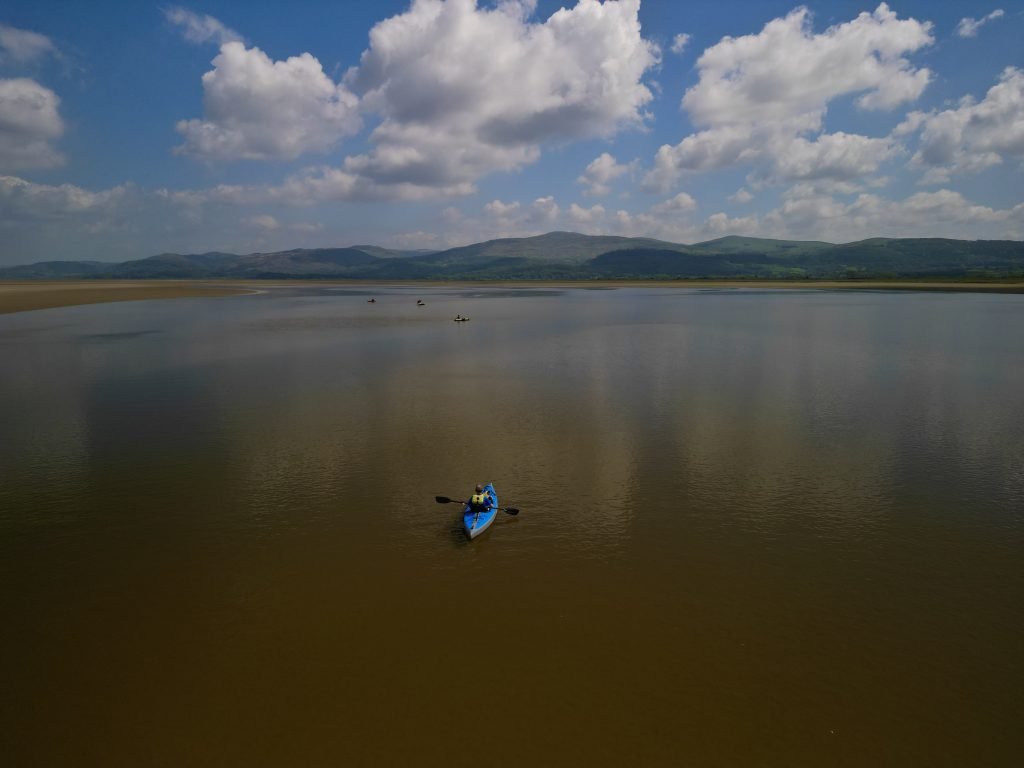
As long as you have researched the terrain of the estuary, planned your launch and landing locations and factored in the tide times, estuaries can afford some of the finest paddling that you can enjoy.
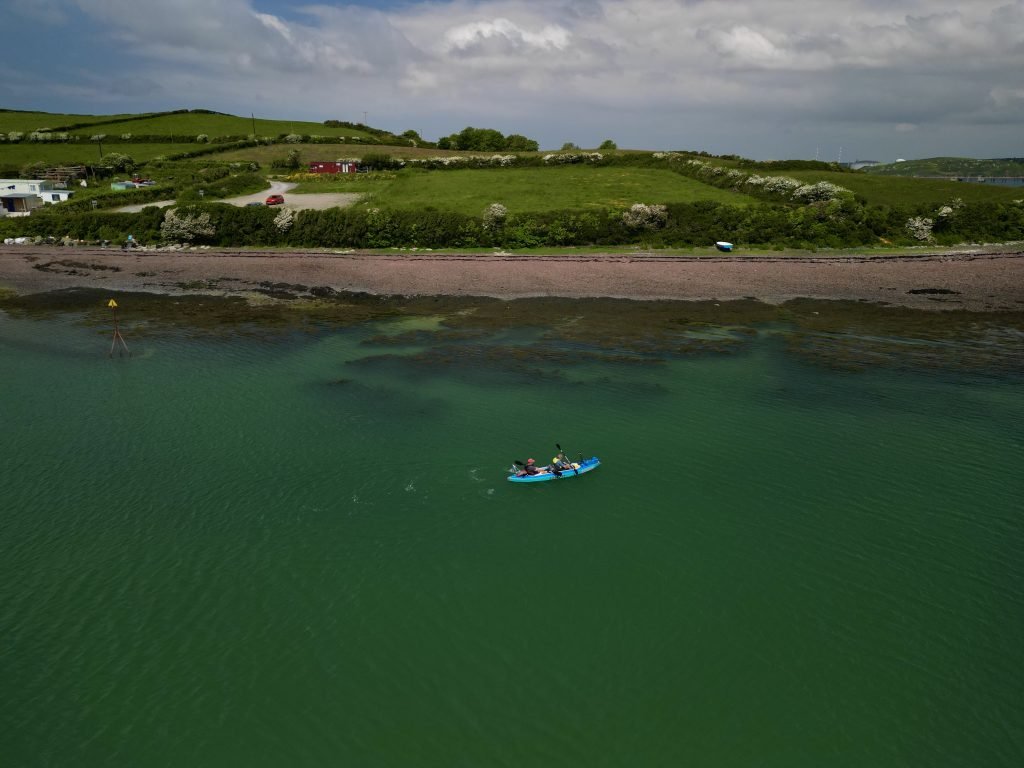
Estuaries are more predictable and generally safer than sea kayaking in our experience, since sea kayaking has the additional issue of sea swell conditions.
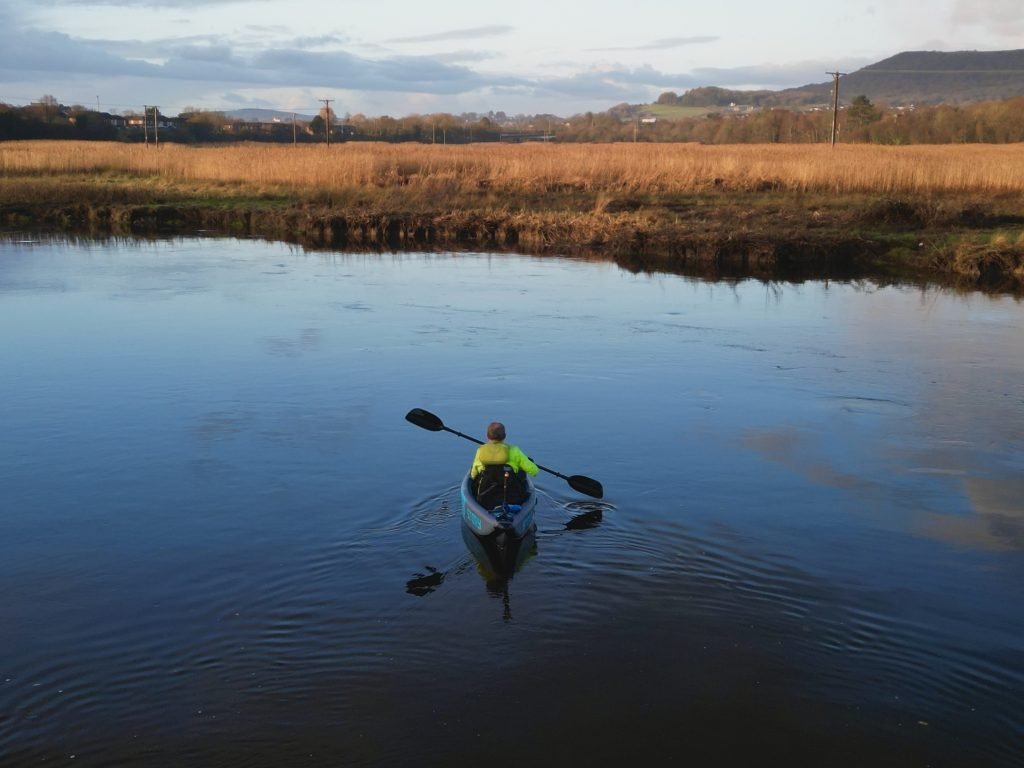
We hope that you find this useful if you are planning to do some estuary kayaking and that you find some good estuaries near you that you can enjoy paddling.
If you want to check out our other Guides relating to kayaking then go to our Kayaking Guides page.
Check out our Youtube Channel on which we have an ever growing range of videos covering out trip reports, product reviews, kayaking guides and more.