
CONTENTS
- Introduction
- Price
- Dimensions
- Accessories
- Stability
- Speed
- Tracking
- Performance in wind
- Portability
- Comfort
- On board storage
- Pros of the Sandbanks Style Optimal
- Cons of the Sandbabks Style Optimal
- Summary
1. INTRODUCTION
The Sandbanks Style Optimal Solo Kayak has built a strong reputation as one of the closest things to a hard-shell experience in an inflatable package.
It promises stability, tracking, and decent speed due to the full drop stitch construction while remaining portable enough for everyday paddlers.
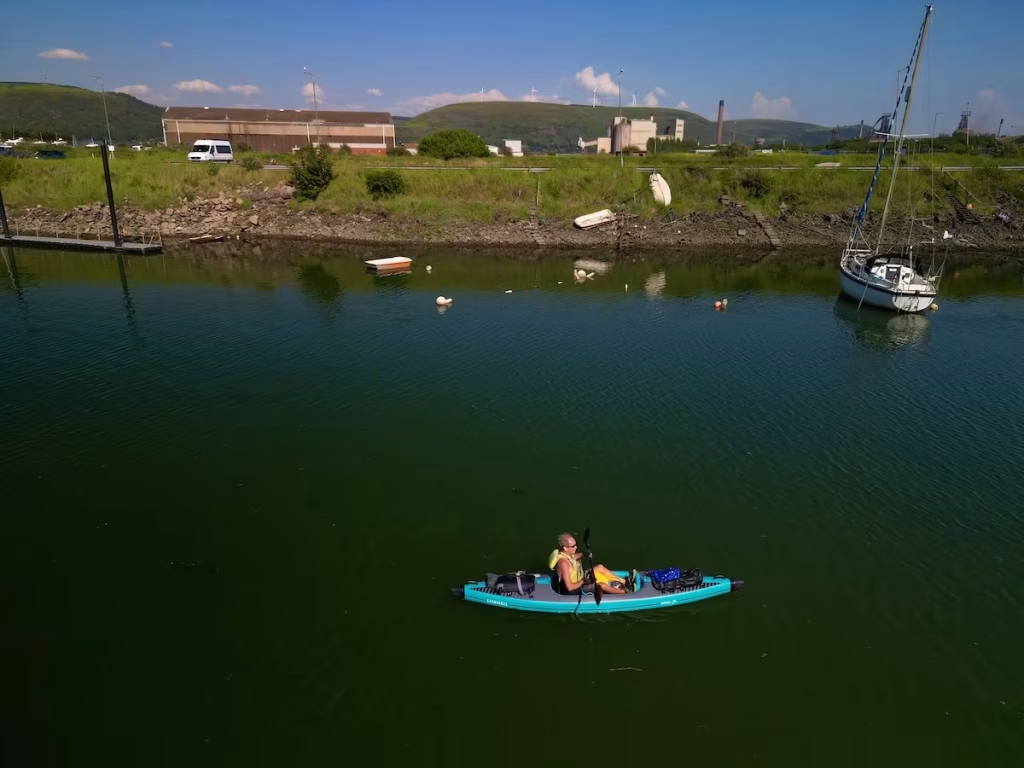
In this review, I’ll break down how it performs across the key areas that matter on the water.
The Optimal kayak was provided to Sandbanks Style to my by way of a collaboration agreement but this review is, as with all my reviews, totally objective and sets out my honest views of this kayak after prolonged use on a number of trips on the coast, estuaries, canals and rivers.
2. PRICE
As at the time of this review in June 2026, the Sandbanks Style Optimal solo kayak usually retails for about £499.
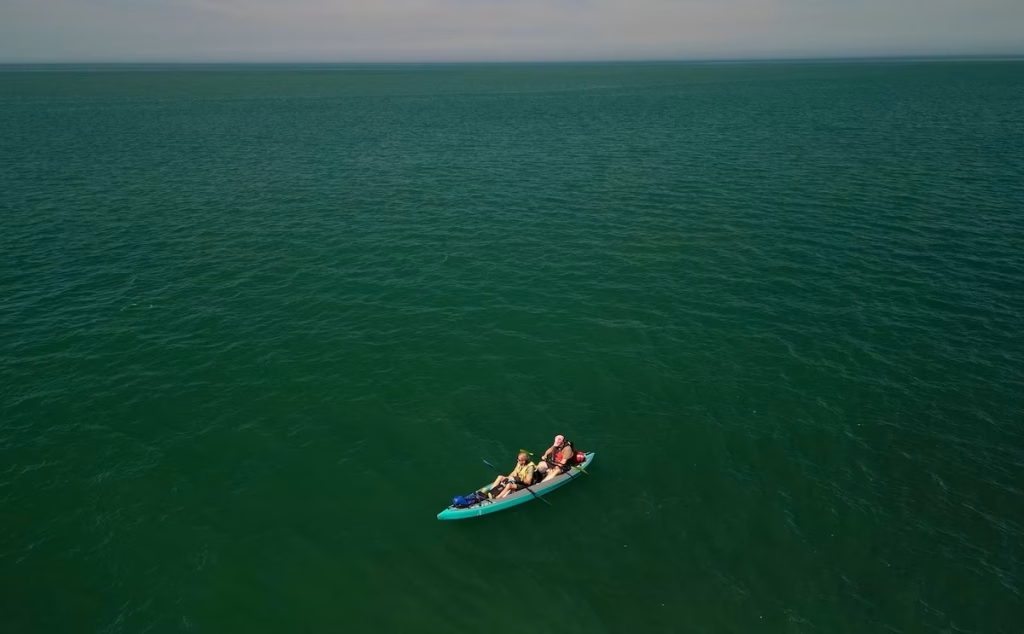
The Optimal also comes in a tandem version which is longer and can accommodate 2 persons. This is usually about £599. I’ve already done a video review, a short video review and a blog post review of the tandem version.
Prices do vary though of course and often times discounts and deals can be obtained.
3. DIMENSIONS
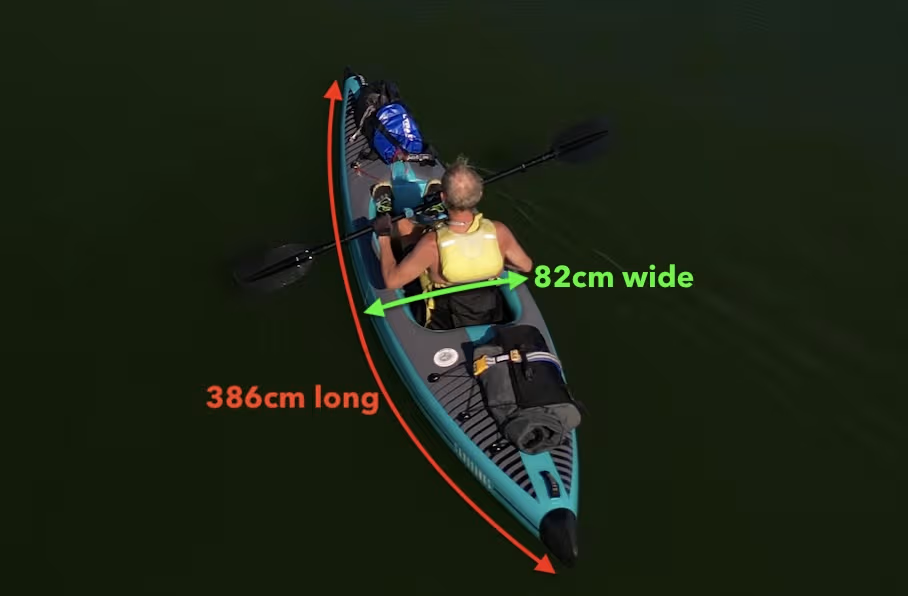
The Optimal solo sits firmly in the “full drop-stitch performance inflatable” category, and the numbers reflect that:
- Length: approx. 12’8” (386 cm)
- Width: approx. 32 inches (82 cm)
- Weight: around 15 kg (kayak only)
- Packed size: roughly 96 x 52 x 30 cm
- Maximum capacity: approx. 159 kg
It’s not ultralight, but this is the trade-off for rigidity and performance.
4. ACCESSORIES
The included accessories are generally good quality:
The Bravo pump is reliable and efficient. It can be used both single and double action and as well as inflating the kayaking it can also be used to deflate it. This helps to suck any residual air out of the kayak and makes it easier to pack up in the bag at the end of a trip.
The paddle is functional and breaks down well into 4 pieces for transport.
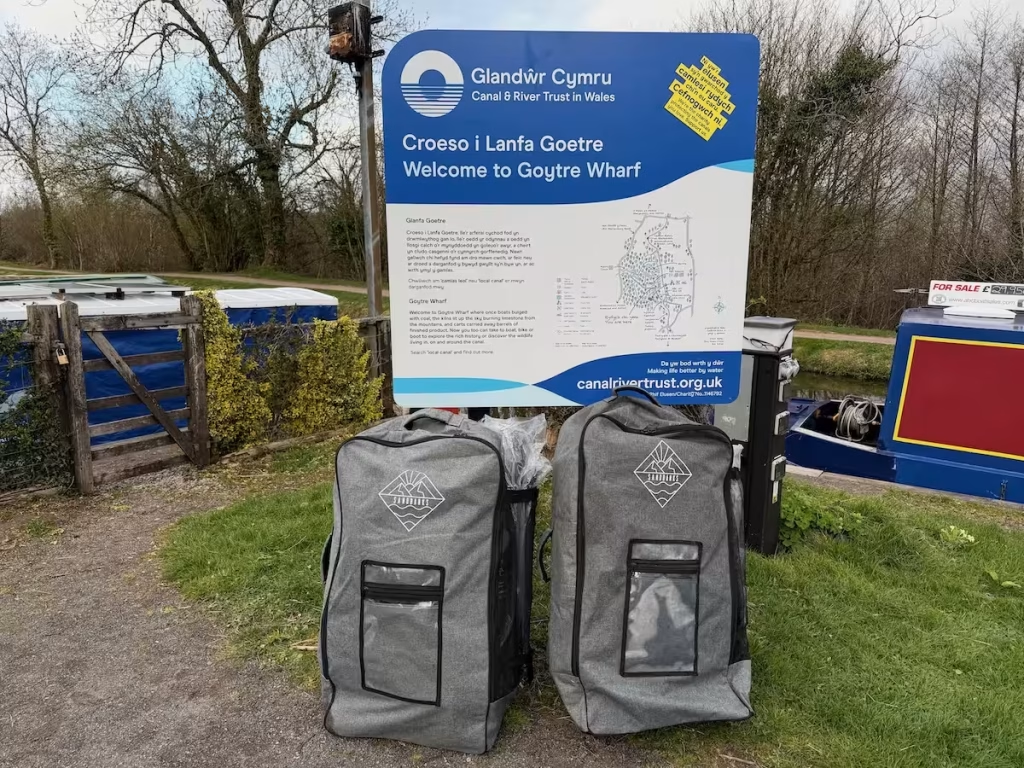
The wheeled bag is rugged and practical. It’s been well thought out with a pocket you can stash away the shoulder straps into which ensures that when you are wheeling the bag, the shoulder straps do not droop down and get caught in the wheels.
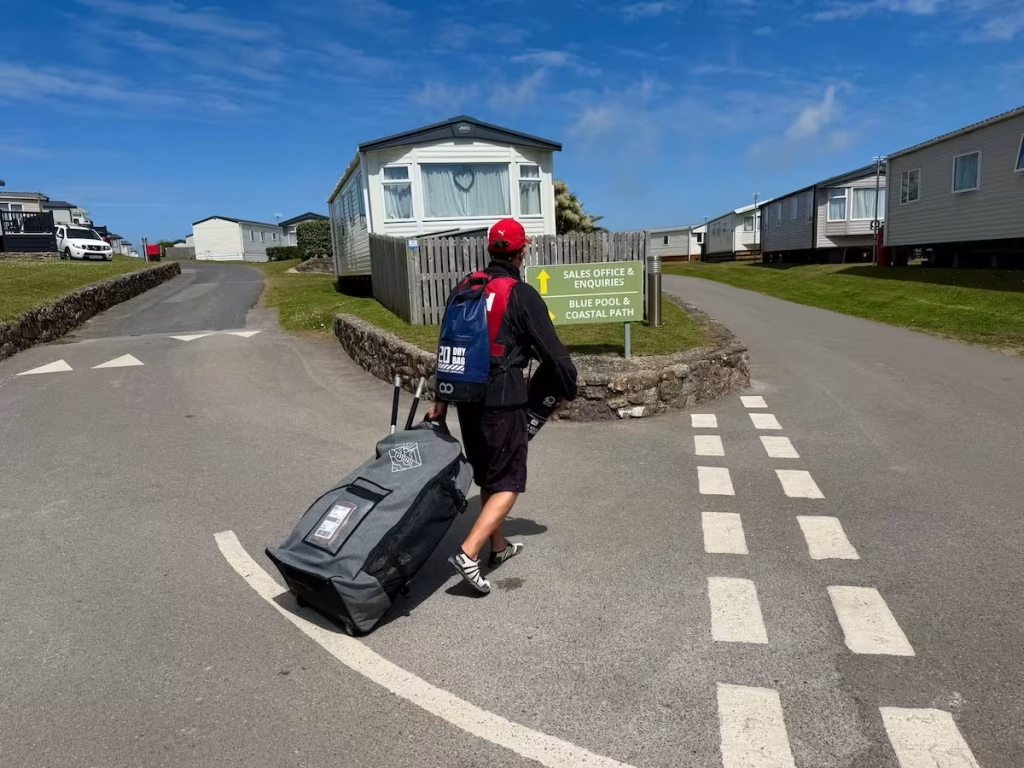
There is also a front pocket on the carry bag for stashing your skeg so that you don’t lose it.
The deluxe seat now comes standard and this includes a foam pad which is much more comfortable than many of the standard kayak seats which have very little padding. There is a pocket in the back of the seat which you can stash small items.
5. STABILITY
Stability is where the Optimal really shines.
Thanks to its wide and relatively flat drop-stitch hull and high-pressure construction, it feels exceptionally stable.
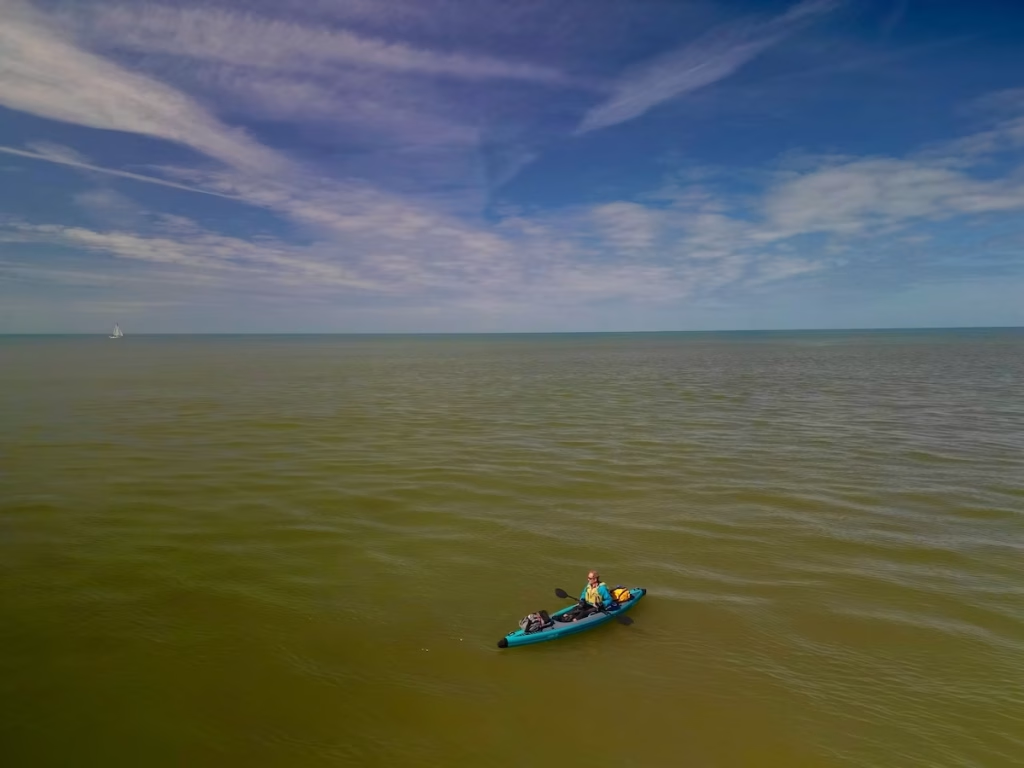
In fact, it’s stable enough that standing up and using it like a paddle board is possible, which is rare in this category.
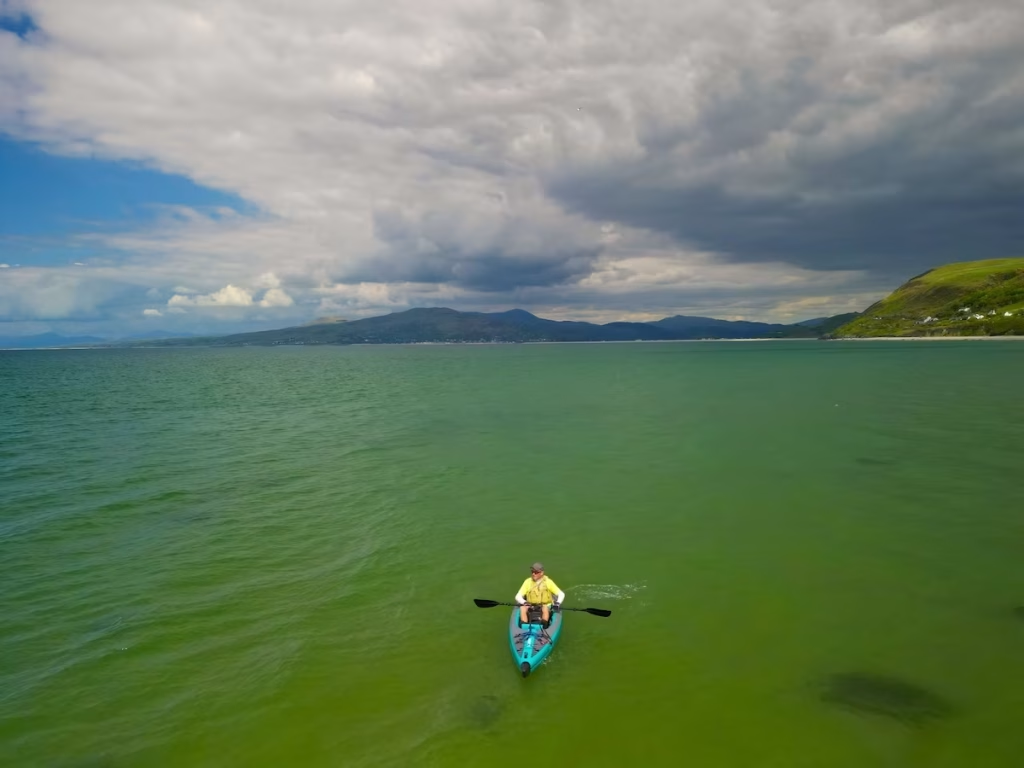
For beginners or those paddling coastal water or estuaries, that confidence-inspiring stability is a huge plus.
The excellent stability makes this kayak very easy to get into and out of compared to less stable kayaks which can sometimes flip over when getting into or out of them.
6. SPEED
For an inflatable, the Optimal Solo delivers respectable speed.
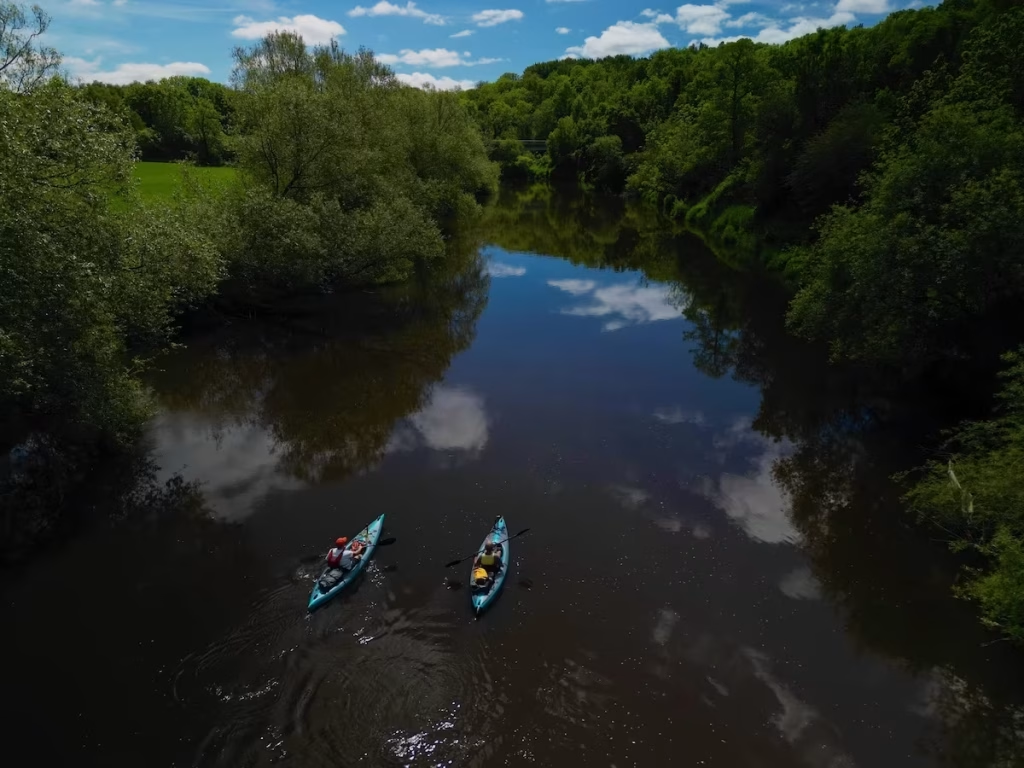
The V-shaped ridge along the keel of the hull reduces drag and helps it glide efficiently, particularly compared to flat-bottom inflatables. The hull of the kayak is much firmer than non drop stitch inflatables and thus helps it to glide through the water.
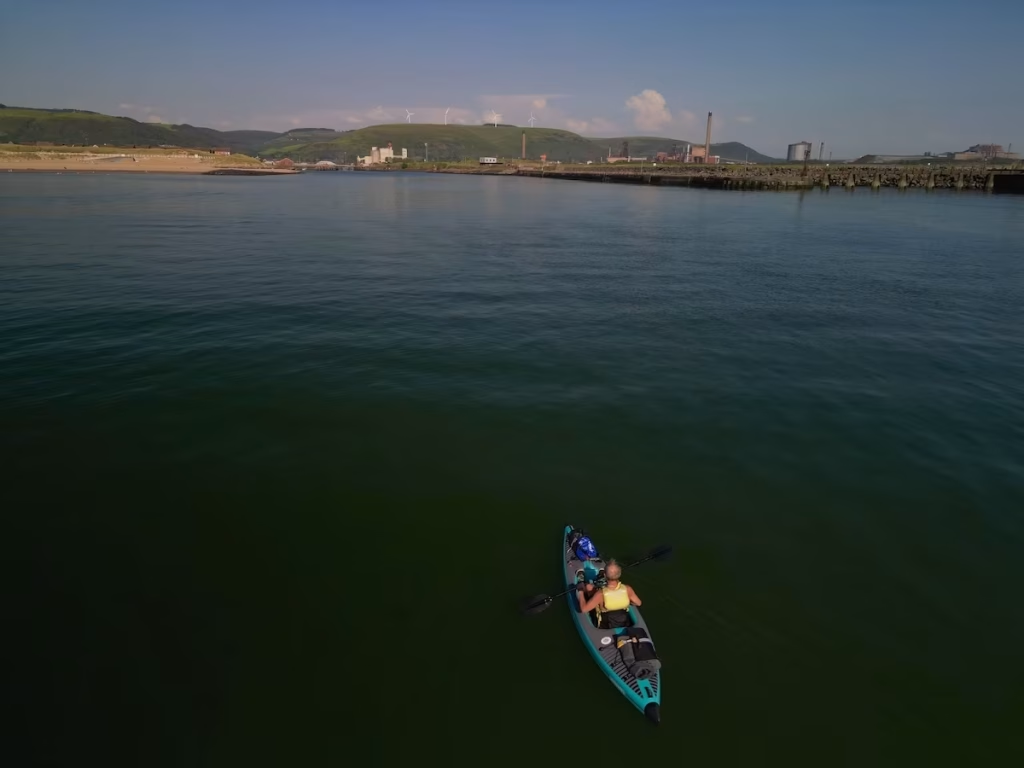
It won’t match a true hard shell sea kayak, but for recreational and coastal paddling it holds a steady pace without feeling sluggish.
7. TRACKING
Tracking is another standout feature.
The V-shaped hull helps the kayak cut cleanly through the water.
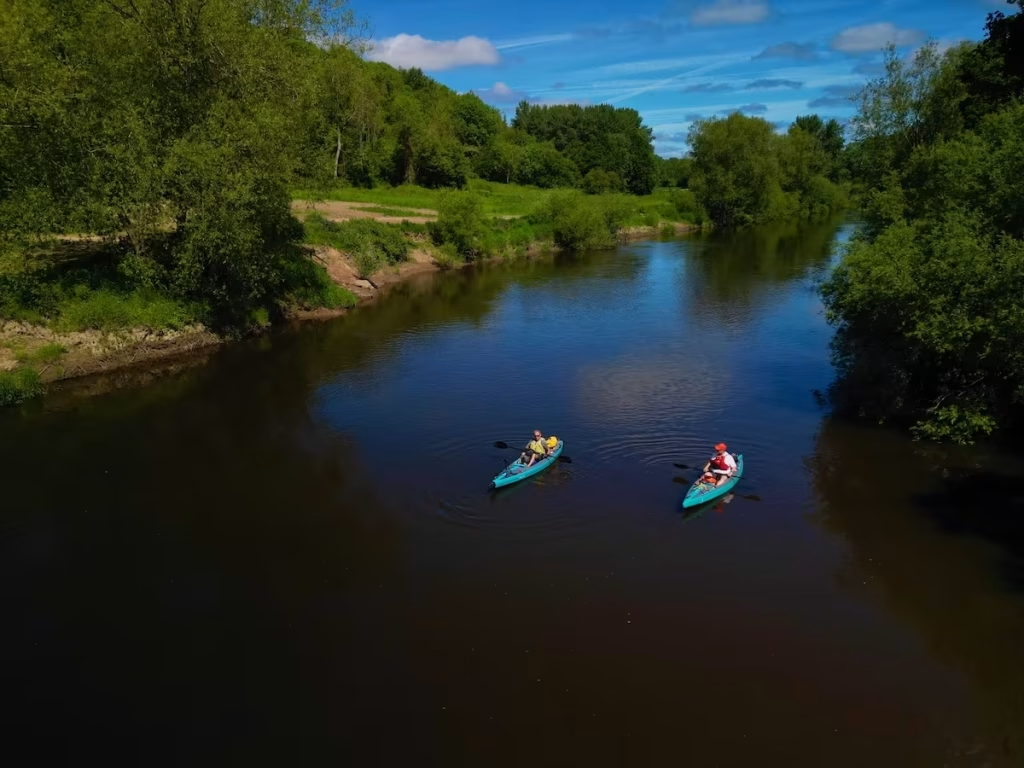
The removable skeg improves directional stability. It holds a straight line with minimal correction.
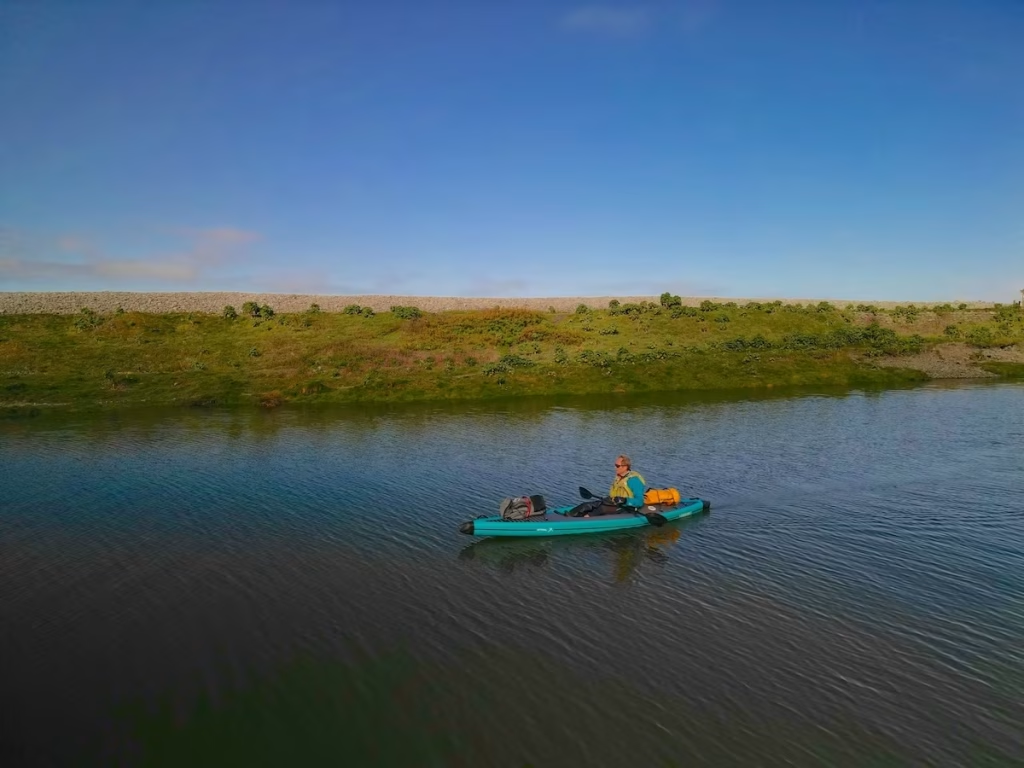
This makes it ideal for longer paddles or exposed water, where constant steering quickly becomes tiring. The trade-off for this tracking is that it’s not the most nimble kayak for tight manoeuvres.
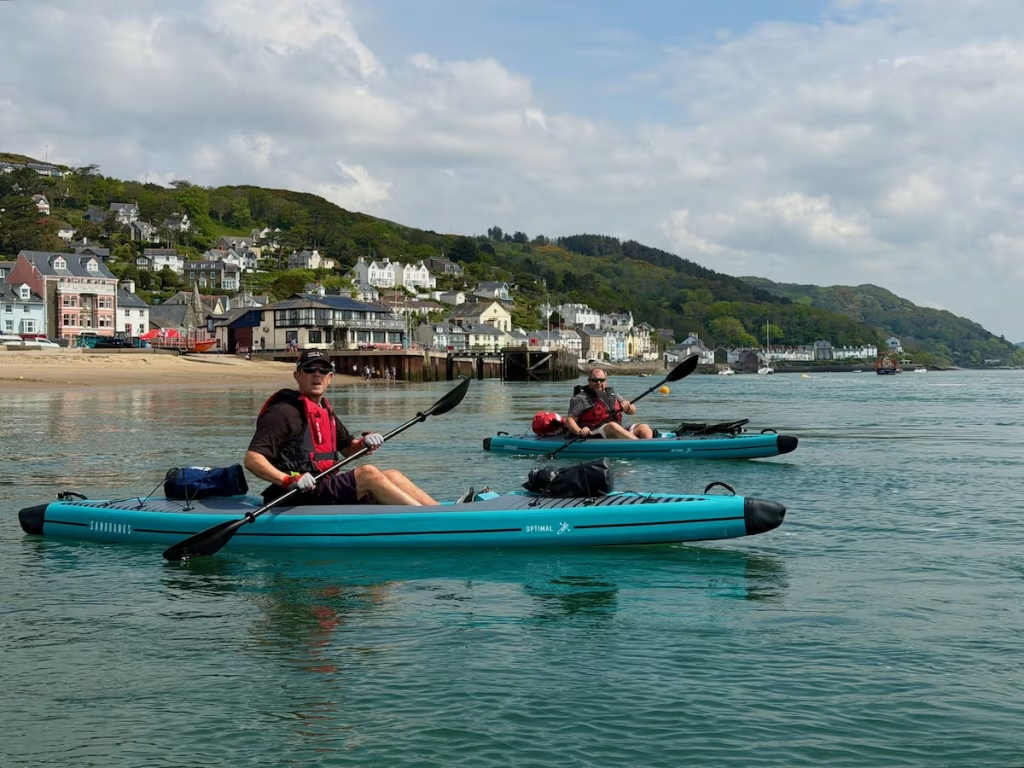
However, I would value tracking over having a tight turning circle any day
8. PERFORMANCE IN WIND
Wind is one of the real tests of any inflatable kayak, and it’s an area where the Sandbanks Optimal performs better than most.
The kayak’s long waterline and the V shaped ridge along the hull help it cut through the water and maintain direction, which reduces the amount of weathercocking (where the wind blows the bow of the kayak sideways).
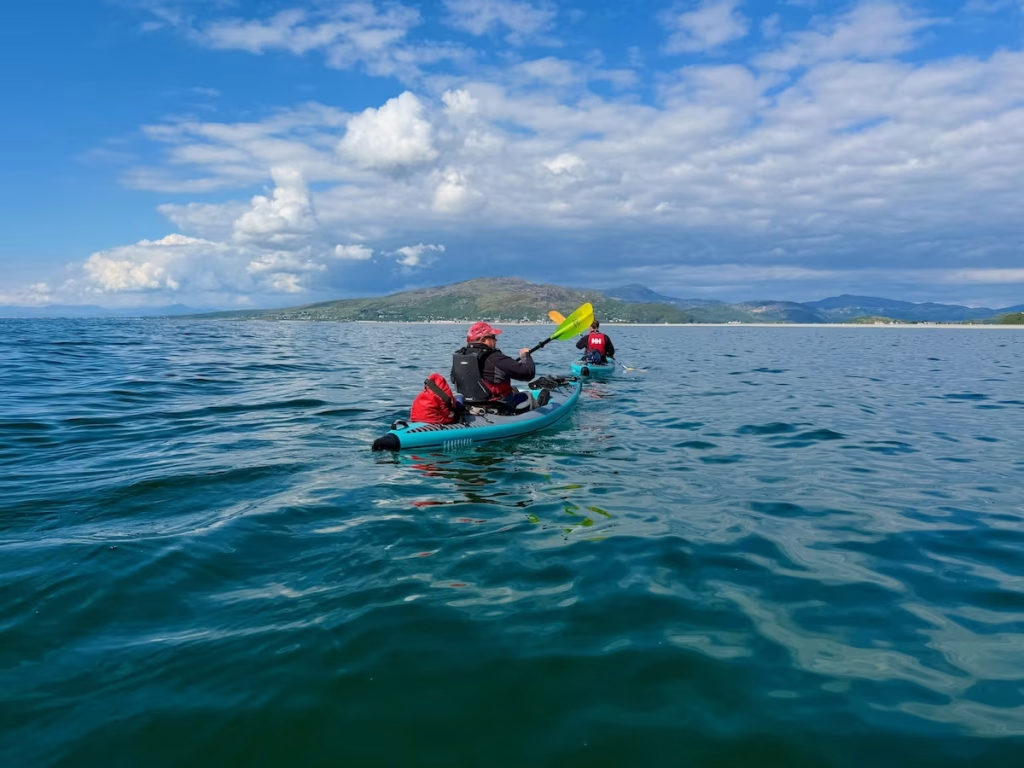
Combined with the large removable skeg, the Optimal holds its line well compared to shorter or wider inflatables with totally flat hulls, meaning you spend less time correcting your course on open water.
Like most inflatables, the Optimal sits slightly higher on the water than a hard-shell kayak, so that you may get pushed off line in stronger cross winds and some corrective strokes are needed. The skeg helps significantly but doesn’t eliminate drift entirely
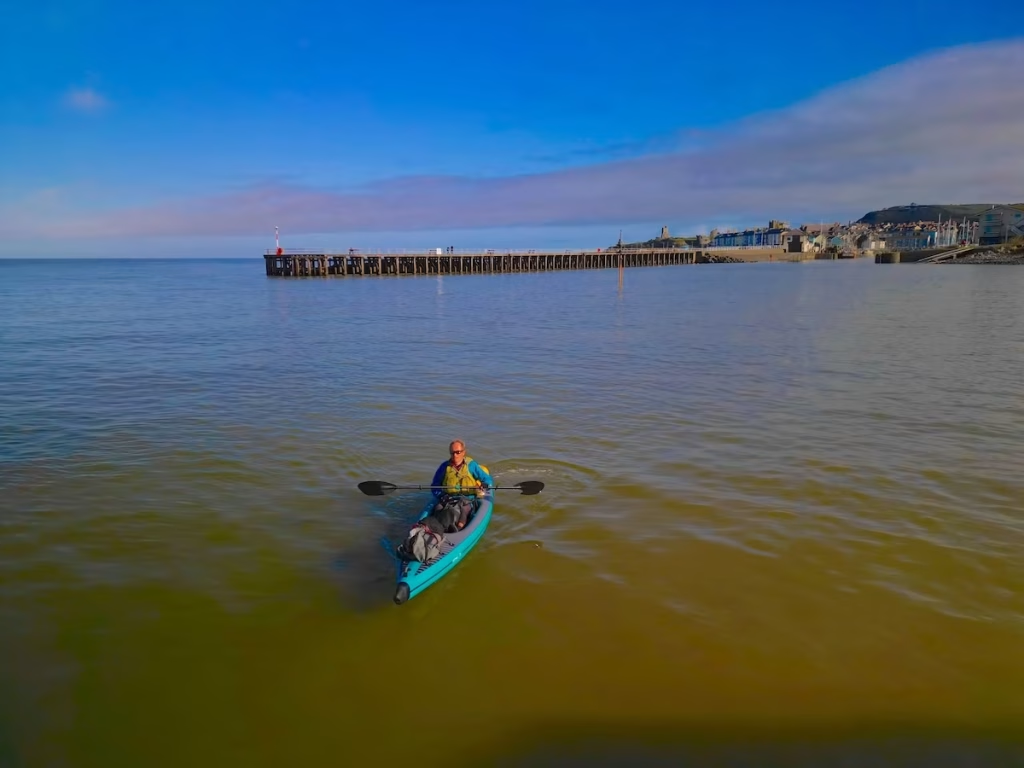
In practical terms, it’s a kayak you’d feel comfortable taking onto estuaries, larger lakes, or sheltered coastal routes—but you’ll still need to respect wind forecasts and plan accordingly.
9. PORTABILITY
Despite being a high-performance inflatable, portability remains a key benefit. It packs down into a compact wheeled bag which you can stash away in the boot of the car.
The kayak is manageable for solo transport since the backpack should be manageable for most people to carry over relatively short distances of a few hundred metres or more.
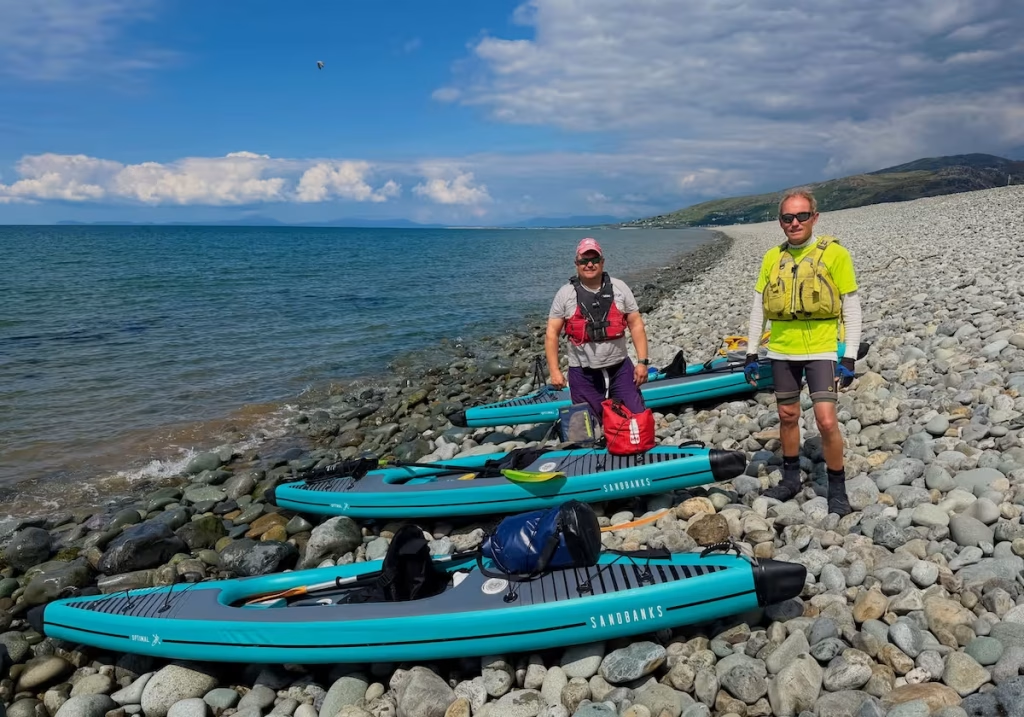
if you are going to be looking to transport it more than a few hundred metres then you probably will want to leave it in the backpack. The wheels on the backpack are sturdy and I’ve even been able to wheel the backpack over hundreds of metres of beach where the sand is damp and relatively firm.
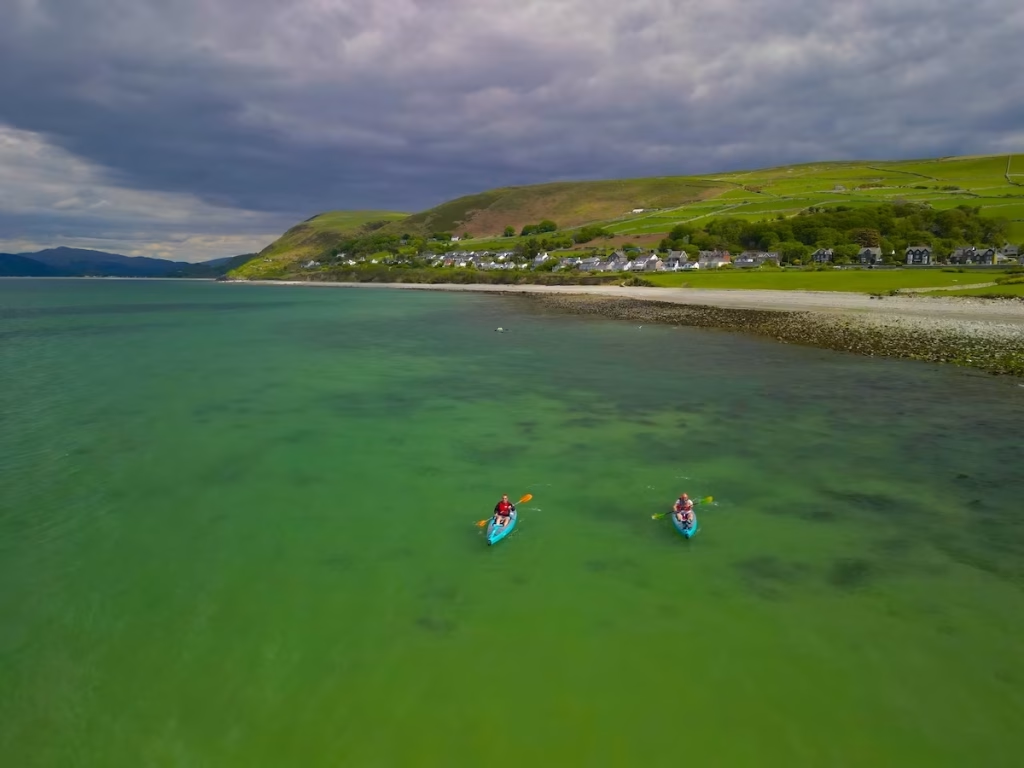
For longer carries on your back, you’ll notice the weight—but you gain a far stiffer, more capable hull in return.
Out of the backpack, the inflated kayak can be carried fairly comfortably on your shoulder. Despite there being no side carry handles, you can get a very good grip under the side deck of the cockpit
There are carry handles on the bow and stern and when there are 2 or more of us out paddling, we will often carry the 2 inflated kayaks easily end to end between us.
10. COMFORT
The seat is held securely in place by the 4 adjustable straps which you attach to D-rings on the rim of the cockpit. The foam pad inside of the seat base is reasonably comfortable for short to medium length paddles.
Since the seat pad has a zipper pocket, you can squeeze in a thin gel waffle pad on top of the foam if you wanted to improve the padding even further for very long trips.
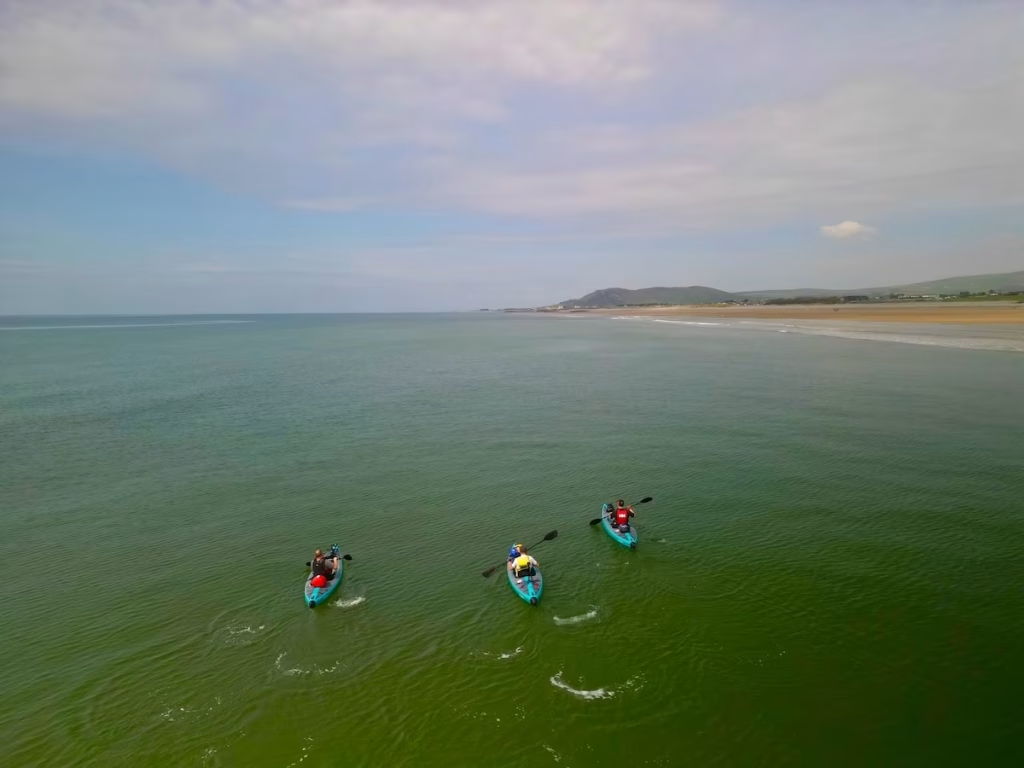
While the kayak does not come with a footrest, you can adjust the seat position and move the seat forward if required so that your feet are in contact with the front well of the cockpit which you can then push your feet against so that you use your full core strength when paddling.
I bought a cheap EVA foam yoga pad from Amazon which I wedge against the front well of the cockpit so that your feet are then pushing against a straight surface (the well of the cockpit is slightly curved). I have found that this very cheap modification serves as an excellent foot rest to push against which enables me to use my core strength when paddling.
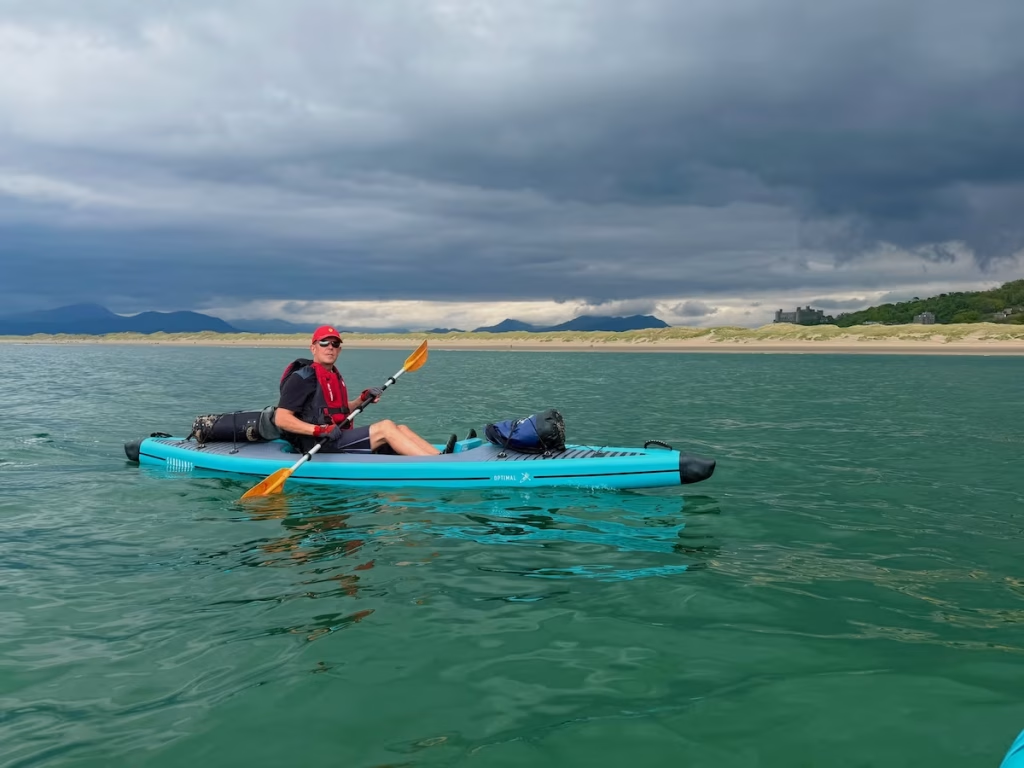
Being quite low sided, you will get some water splashing into the cockpit on choppier waters. The floor of the cockpit has a slight trough along it which helps to drain water to the drain well which is situated at the rear of the cockpit behind the seat.
It is fairly easy to drain out what water does collect in the floor of the cockpit by using a sponge to soak the water up and then drain it out over the edge of the cockpit.
11. ON BOARD STORAGE
Storage is practical but not extensive.
The front and rear decks have built in bungee storage areas enabling you to tether down bags or other items onto the decks.
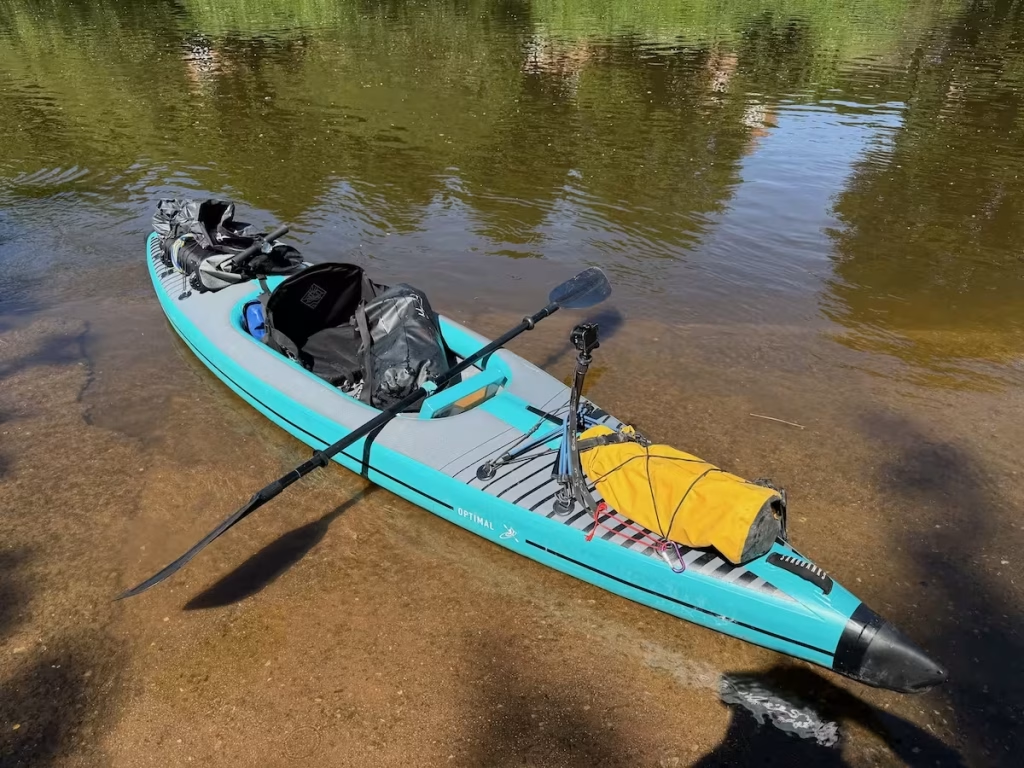
There is fairly limited storage space within the cockpit itself although you still have room to have a reasonably big dry bag inside of the cockpit due to it’s width.
12. PROS OF THE SANBANKS STYLE OPTIMAL
- Extremely stable even in fairly rough open bodies of water
- Excellent tracking and straight-line performance
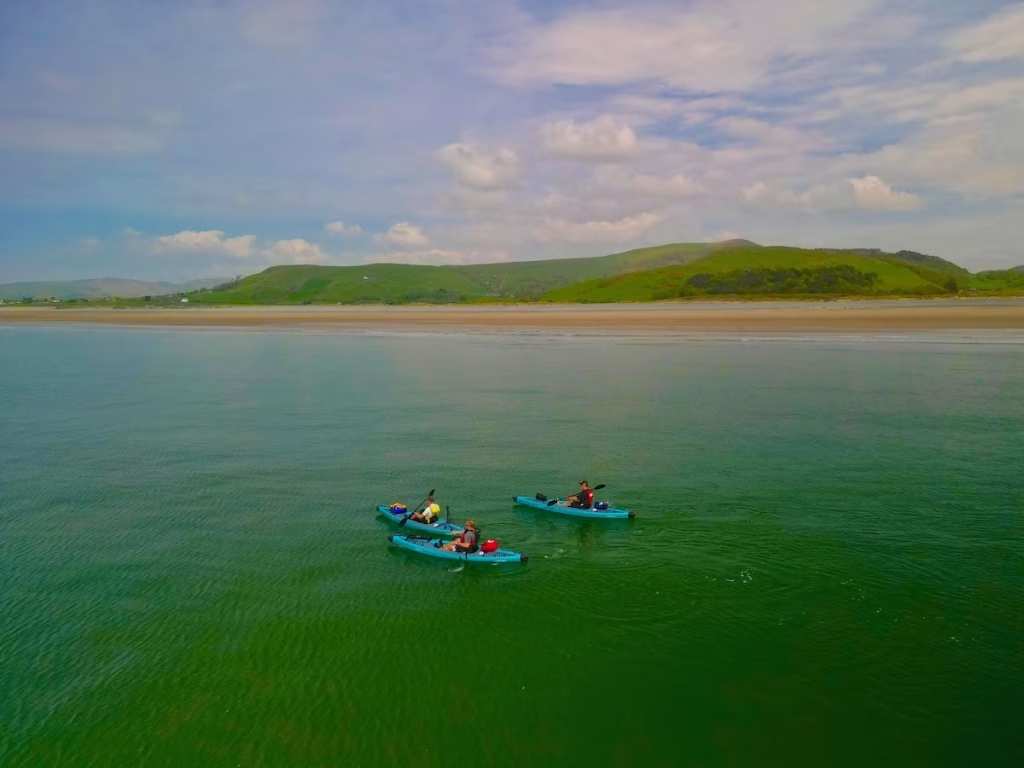
- High build quality with drop-stitch construction
- Feels close to a hard-shell kayak due to the drop stitch construction
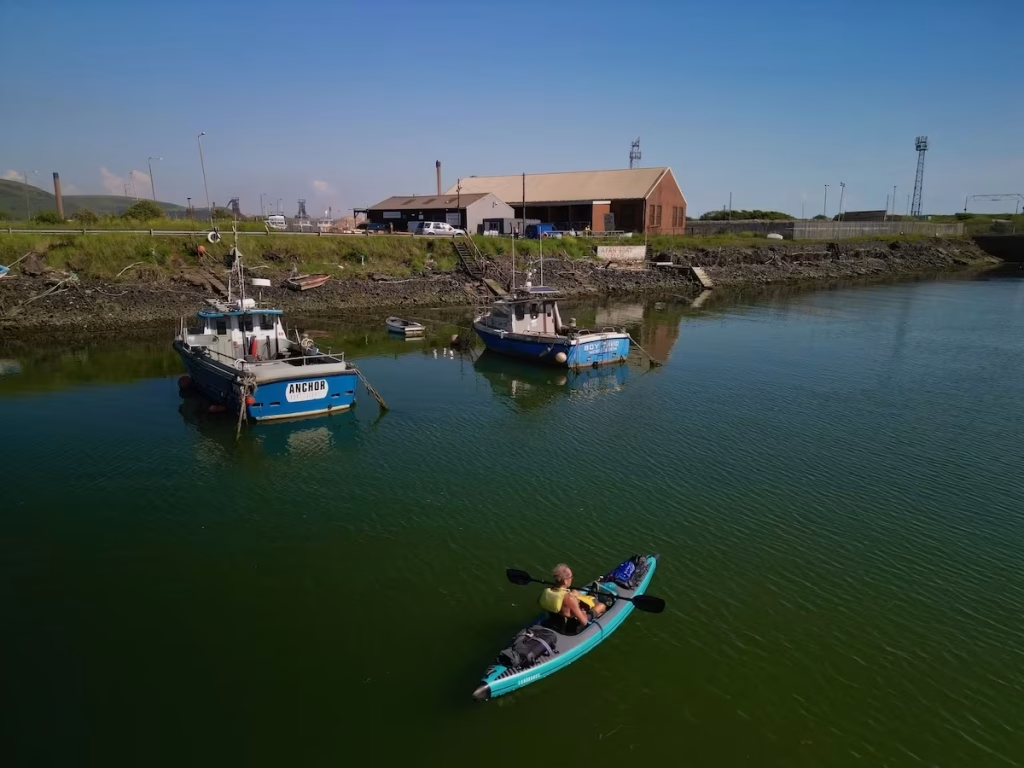
- Fells very well constructed and comes with 5 year warranty from Sandbanks Style
13. CONS OF THE SANDBANKS STYLE OPTIMAL
- A bit heavier than entry-level inflatables
- Not the most manoeuvrable
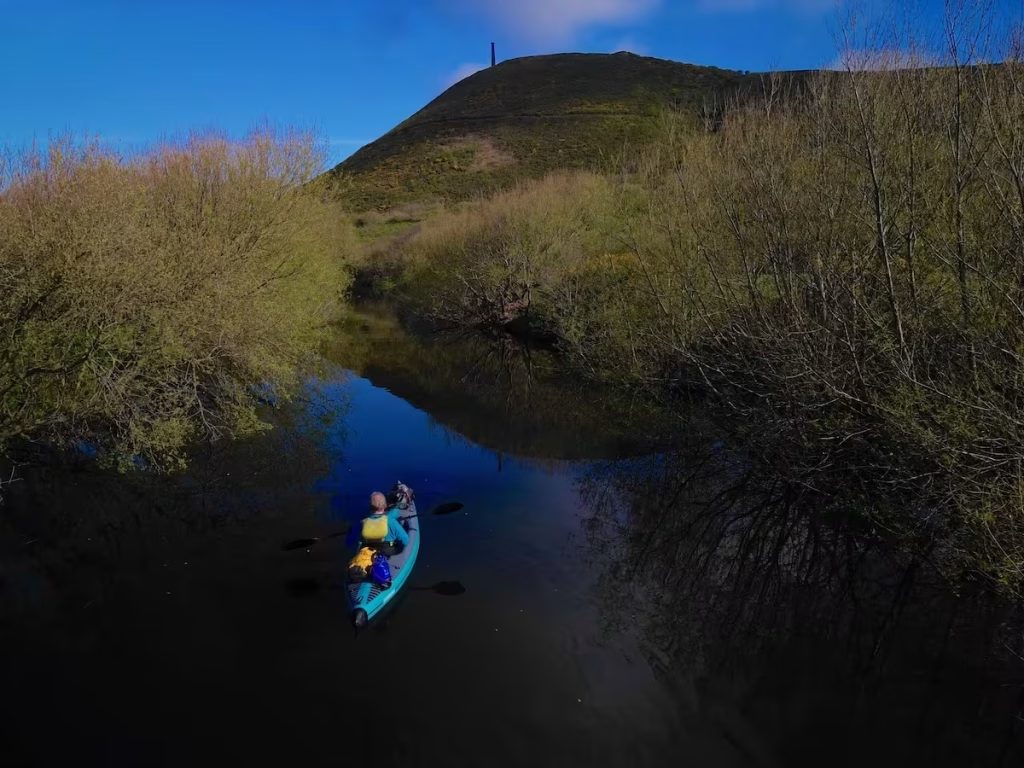
- Limited storage capacity in the cockpit
- Seat can feel firm on longer paddles
14. SUMMARY
The Sandbanks Style Optimal Solo Kayak is one of the best options available if you want hard-shell-like performance without losing the convenience of an inflatable.
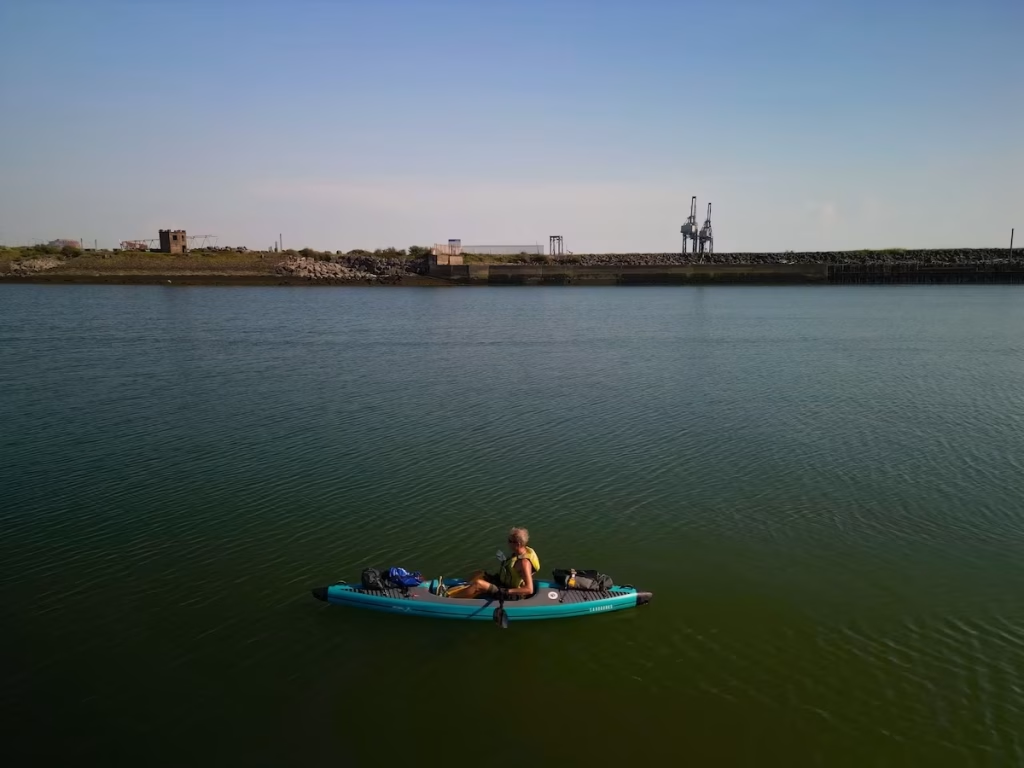
It excels in stability and tracking, making it ideal for:
- Coastal paddling
- Estuaries and lakes
- Longer flat-water journeys
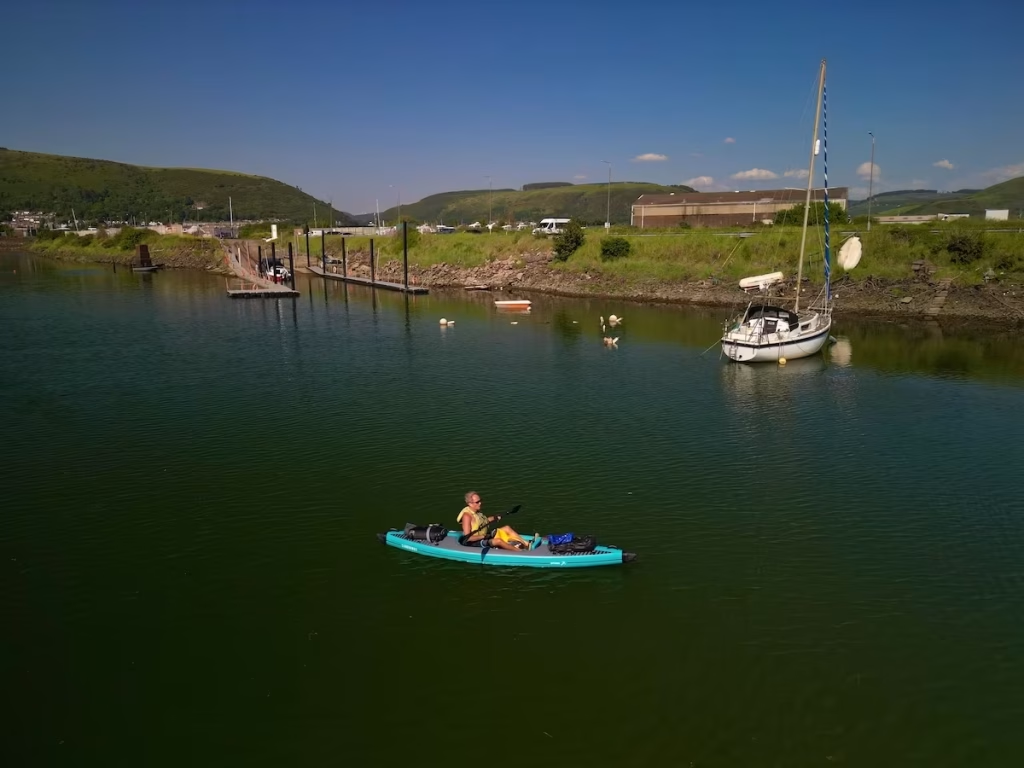
While it’s not the lightest or most agile kayak, it offers a fantastic balance of portability and performance.
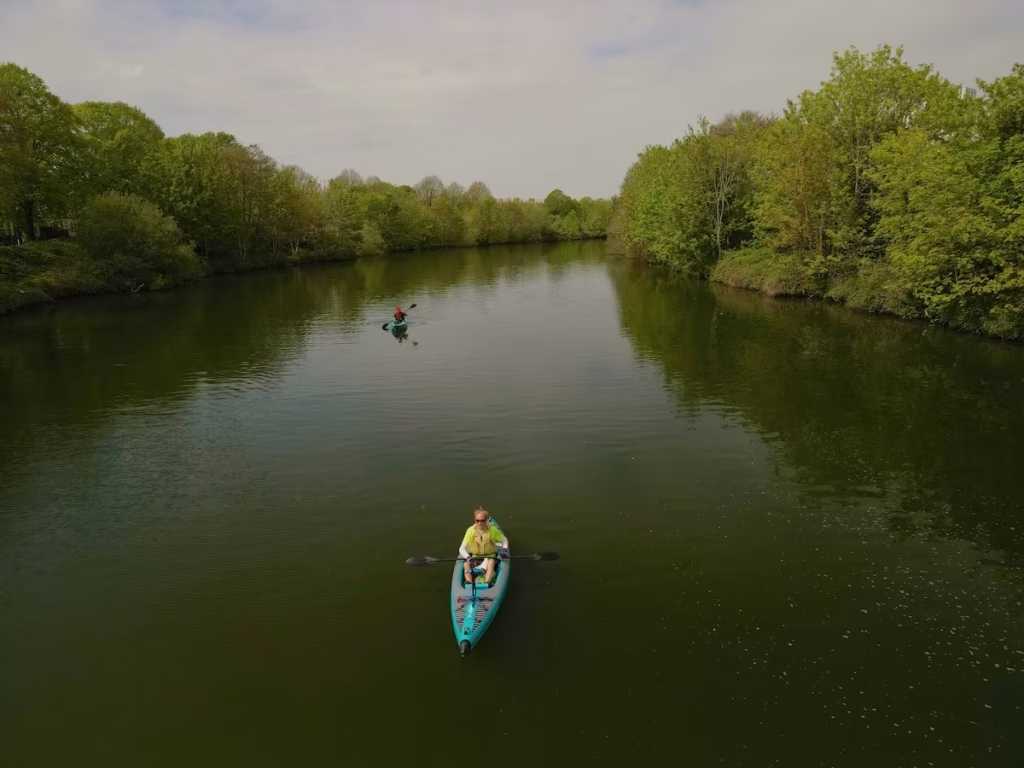
Overall: If you’re looking to step up from a basic inflatable to something that genuinely performs on the water, the Optimal Solo is a seriously strong contender—and one that will suit a wide range of paddlers.
I you are interested in buying a Sandbanks Style Optimal kayak then consider using my affiliate link below which will entitle you to a 10% discount and will also help to support my website and Youtube channel. You need to use the discount code KAYAKCREW10 at checkout to claim your discount.
https://www.sandbanksstyle.com/?sca_ref=11566844.JXPyAt8z9Ub
Below is a link to the Youtube video review of the Sandbanks Style Optimal solo kayak on my Youtube channel: